Saturday, February 21, 2026

«Un héros très discret» (1996)

 The most beautiful lives are those we invent

France between World Wars. Little Albert Dehousse admires novels about heroes. His mother claims that her late husband died for France in the First World War. This story is disputed by the neighbors, but who cares? When the Second World War broke out, Albert misses his chance to be a real hero. Still, he pretends to be a writer by plagiarizing other person’s work and, in process, wins over a beautiful girl. After the war, he goes to Paris and becomes a Resistance hero.      

The collective national unconsciousness always tries to clear out some painful or shameful episodes. The post-war France adopted the legend that the populace was actively resisting occupation and only a few renegades were collaborating. Therefore, many active collaborationists avoided prosecution by claiming that they were working for Resistance. Some of them were even able to occupy important posts in the French government.

Other people claimed that they were in Resistance in order to advance themselves in the post-war society. Albert Dehousse luckily places himself into collective rewriting of history. He starts out by appearing in newsreels with returning POWs and frequenting reunions of old resistance fighters. There he hears war stories and begins constructing his heroic biography. Albert is very successful and he is able to enter the circle of high-ranking persons.

Why this film was released in 1996, if the war ended 51 years ago? One of the reasons was that France was rocked by Maurice Papon trial. He was a collaborator who, among other things, organized deportation of Jews, but after the war he was able to escape prosecution by reinventing himself as a loyal Gaullist. He occupied many important posts, including Prefect of Police in Paris and Minister of Budget.

Of course, Albert was not complicit in any war crimes. He is portrayed as a person with a vivid imagination, who is able to successfully reinvent himself. The post-war France desperately needed a lot of new heroes and he was able to ride that wave. Only one day his heroic credentials will be put to a real test. Will he be able to pass that test? I will not spoil it.

The film captures well the contradictions of the French society. The film director inserts a lot of interviews with historians, writers and war veterans, and they all give a very confusing portrayal of Albert’s so-called heroic deeds. What about the hard truth? It is not very popular, if you able to reinvent yourself and make others to believe in it. Such Alberts were all over Europe, even in the Soviet Union.

«Un héros très discret» is a very good film about rewriting of history. Watch it and then read some real post-World War Two stories. I bet you, that that you will find that postwar Europe was full of Alberts - men who reinvented themselves and were believed because society needed to believe.

Saturday, February 14, 2026

«Il portaborse» (1991)

A Medieval Court in Modern Italy: Corruption and Patronage in Il portaborse 

Professor of literature Luciano Sandulli desperately needs money to fix his old house. His ghostwriting does not produce a lot of money but he secured a position as a speechwriter for the Minister of Industry Cesare Botero. This job can quickly fix all of his financial problems but Luciano understands that Cesare Botero is much more immoral and corrupt than everybody thought.

By the late 20th century, Italian political class was famous for its rampant corruption. As one commentator said about Italian Socialist Party “the convent is poor, but the friars are rich” and those words can be applied to Italy – country with lots of political and economic problems, but it’s governing class drove Ferraris and lived in mansions.


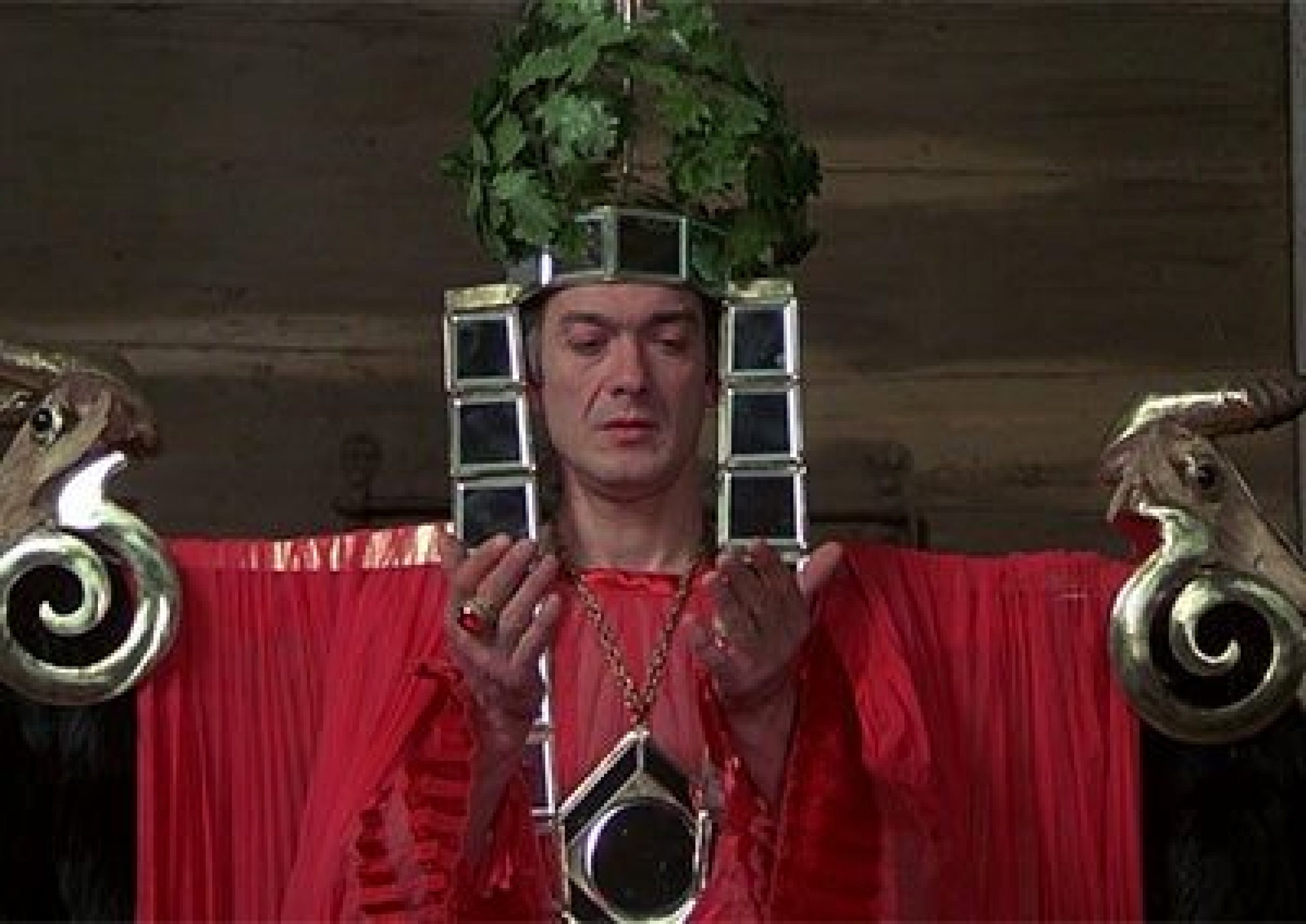
Cesare Botero reminds us of the Medieval feudal lord, who has to pay a token respect to the late 20th century values. He smiles on camera, takes part in television interviews and has to put himself up for the reelection. Nevertheless, the only thing that he cares about is enrichment. His people also get a share of profits, but it can be finished in a second. If the person compromises himself or stops being useful, he will quickly discard him as a used ammunition.

Luciano Sandulli is portrayed as a simple and decent man who suddenly became useful to the lord. At first, he is at the margins of corruption and he is able to enjoy the fruits of his new status. Still, one day he will need to take part in something very dirty in order to show loyalty to Cesare Botero. One of his top students already became corrupt lawyer, but will Luciano follow the same path or will he choose to remain human?

Still, this is not an American film, where one brave person can destroy the corrupt system. The Italian political system has lots of Cesare Botero who will always find a way to add an extra bunch of votes and who has many patronage jobs in exchange for favors. So, why bother yourself with truth, if it only leads to life in poverty, if you can stay loyal and useful to the lord and earn a lot of money in the process?

Nevertheless, the history can be unpredictable sometimes. In 1991, the Italian ruling class was invincible, but in the next year, they suddenly became vulnerable for prosecution. Despite that, the result was not very encouraging.

If you are interested in Italian political history – watch this story about a Medieval court in the late 20th century Italy. 

Wednesday, February 11, 2026

«Salò, or the 120 Days of Sodom» (1975)

All's good if it's excessive 

Jeffrey Epstein’s island continues to resurface in world media. People periodically rediscover that certain wealthy and powerful individuals recognize no limits in the pursuit of pleasure. The story is not new; it merely changes its setting. It was written by the Marquis de Sade in the eighteenth century and given cinematic form in the last film of Pier Paolo Pasolini («Salo, or the 120 Days of Sodom»).

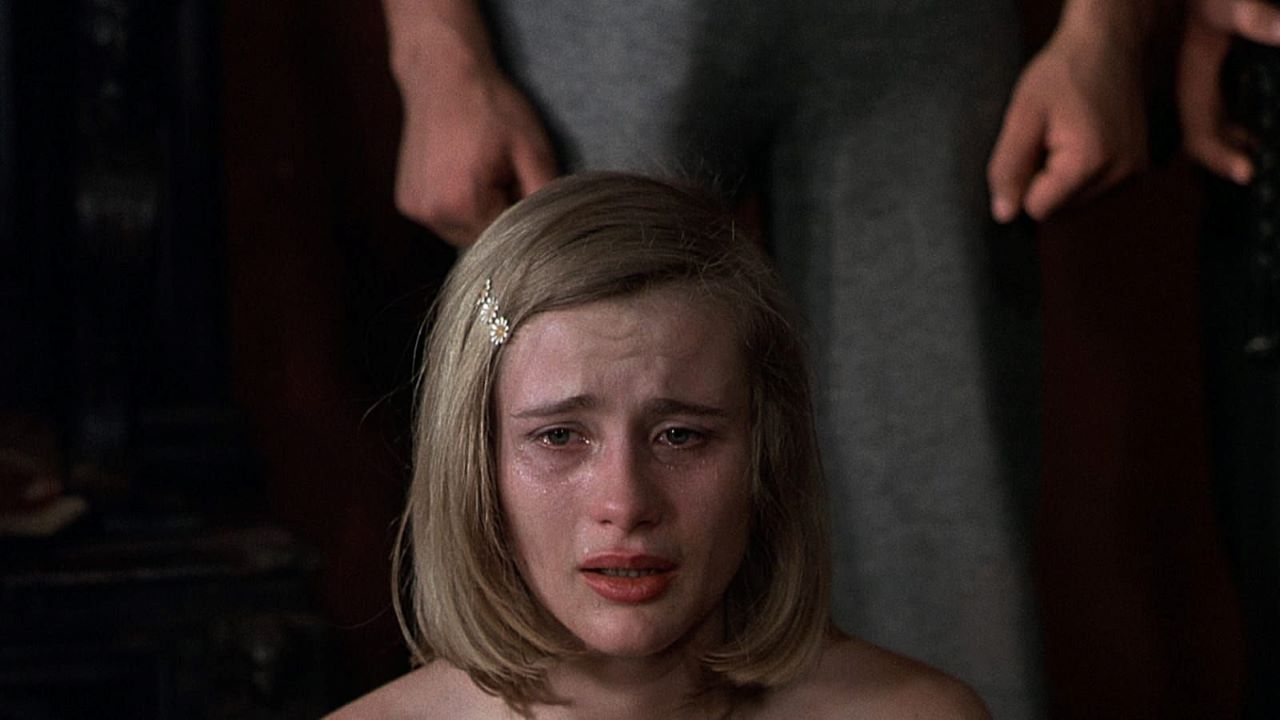
Set during the final days of the Republic of Salo, the film portrays the four figures of authority – the Duke, the Bishop, the Magistrate, and the President – who sense that the Republic’s days are ending and they decide to grant themselves the final indulgence. They kidnap nine young men and nine young women and confine them in a secluded villa. There, four old prostitutes tell elaborate stories to stimulate the imagination of the masters. After that, the structured and ritualistic degradation commences.

The totalitarian system completely reorganizes reality and reduces a human being to a mere part in the system. Human beings are stripped of names, identities and even grammatical recognition. They are merely «it» and even God is forbidden. Four impeccably dressed men have pushed Him from His throne.

At certain moments, the humanity can be restored to a certain person. Still, it is granted at the mercy of the Masters and it can be taken back in a second. These rights are not inherent; they are granted at the Masters’ discretion.


Certain resistance exists, but is brief and annihilated without spectacle. Most victims attempt a different concentration camp strategy: survival through betrayal. They denounce each other in order to buy a few more extra hours of life. Totalitarian systems replicate themselves not only through terror but through the offer of minor elevation to a human status, but it means becoming an executioner.

In the final sequence, Pier Paolo Pasolini even dehumanizes the death. Executions occur without speeches or ideological proclamations. Screams are muted and we watch the process through binoculars. Their death looks like the destruction of worn-out furniture.


There is no place for justice within the world of «Salo». Some perpetrators may face consequences when regimes fall, but most others will quietly dissolve back in the civilian world. Their capacity to objectify and rationalize excess will not disappear after a political change.

Pasolini’s film is not for everyone. It repels and disturbs. Still, it is not about shock content – it is about what happens when power is insulated from consequence, when pleasure is detached from reciprocity, when human beings are treated as disposable components within a closed circuit of privilege.

It is precisely here that the parallel with Epstein becomes disturbing. In order to see this parallel, you need to watch the film and answer this question by yourself.