Showing posts with label Catherine Deneuve. Show all posts

Sunday, March 29, 2015

Indochine

In our youth we thought the world consisted of inseparable things: men and women; mountains and plains; humans and gods; Indochina and France...

The longest addition to Apocalypse Now Redux is a sequence when the crew have discovered a French rubber plantation. Despite a fact, that the First Indochina War has finished more than ten years ago and Vietnam is an independent country; the French family will defend this frontier until the last man dies. I have watched Apocalypse Now for several times and The French scene was always my favorite. That is why, I have decided to “fill the gap in my education” and watch Indochine.

In the French Indochine, Eliane Devries adopts a young girl from the royal dynasty called Camille. Because of that, the Devries Planation becomes one of the largest into the Indochinese Peninsula. After ten years, Eliane raises Camille as her own daughter and her plantation runs a huge profit. At the same time, Eliane starts an affair with young naval officer called Jean-Batiste. Everything ges as usual, until Jean-Batiste saves Camille from terrorist attack and they fall in love. Eliane tries to protect Camille and has Jean-Batiste transferred to a remote base. Camille is quickly engaged to another Vietnamese noble and communist sympathizer called Tanh. Immediately after engagement, Camille, with consent of Tanh, escapes from Saigon and goes to the country to find Jean-Batiste.
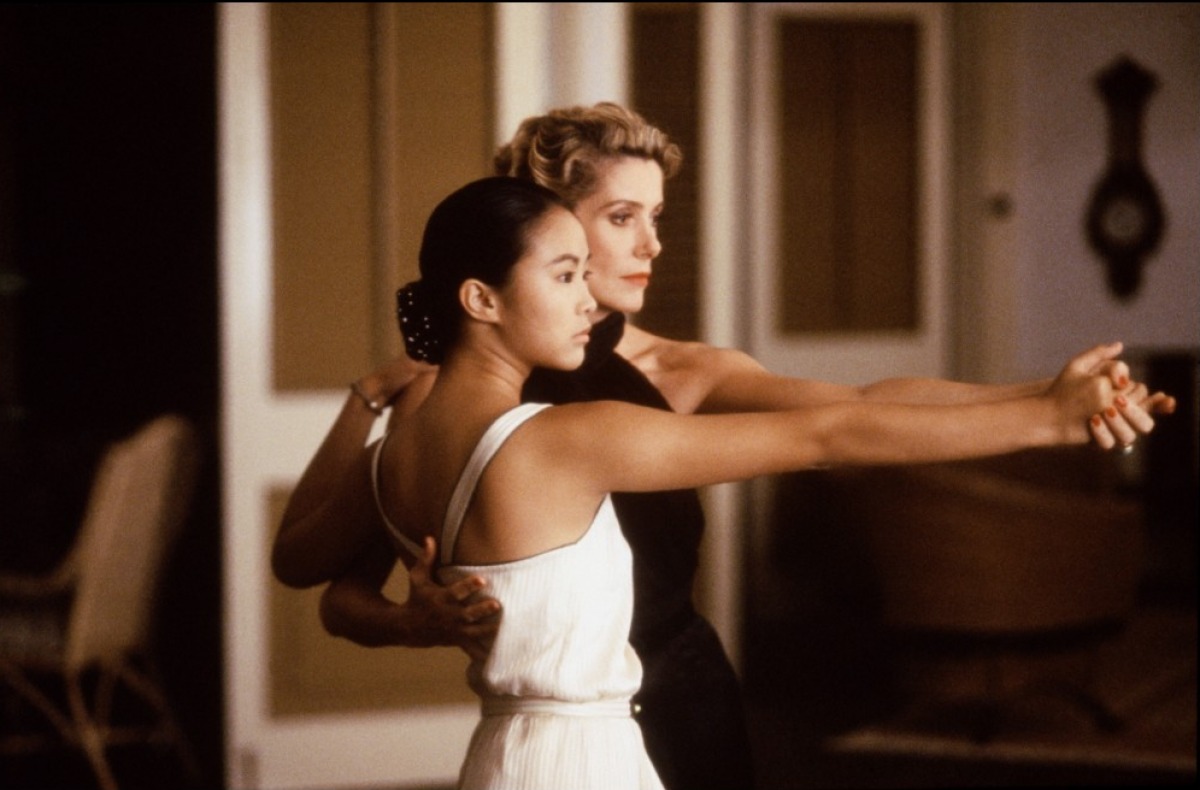


The film depicts an idyllic colonial life: huge plantation; strict, but fair, Eliane, who never punishes her workers unfairly; peaceful coexistence of French and Vietnamese elite. Nevertheless, this idyll lasts only in the plantation and, to the limited extent, in Saigon. In the wider world starts out a revolution. The first revolutionaries starts out an arsons and sabotages; carries out assassinations of collaborators. Camille after escaping her “golden cage” sees the life of her country and radicalizes.

The French society shown as inert and incapable of preventing the mounting revolution. The only hero, who tries to prevent revolution, is a head of the colonial police Guy, but his work is constantly sabotaged by lack of cooperation from Army and Navy and the Popular Front's decision to liberate the political prisoners completely ruins his work.
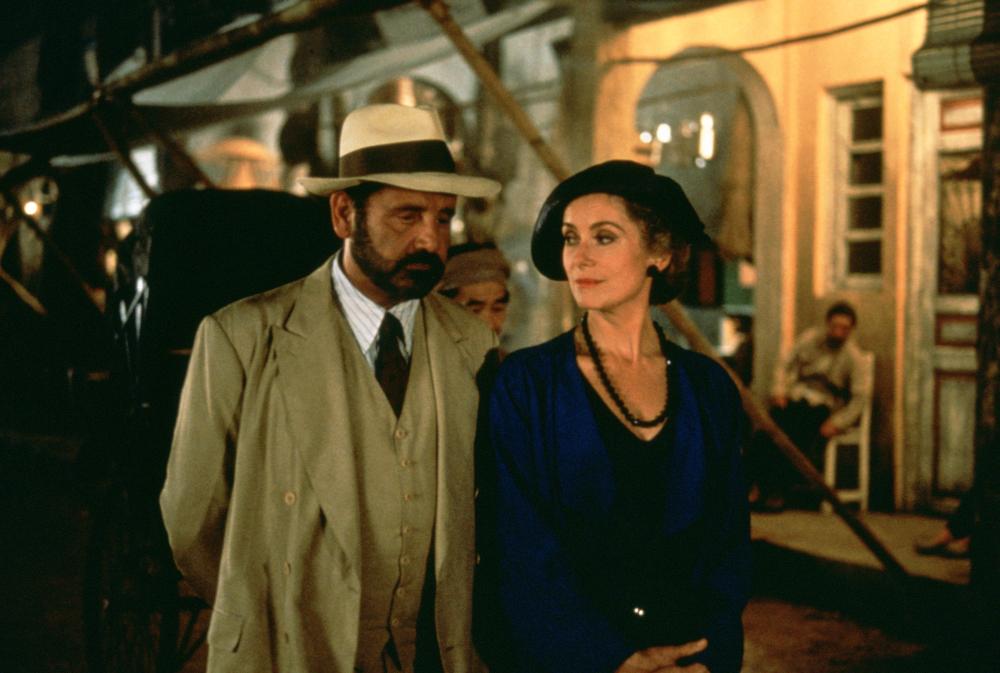


Love plays the main role in a film. The one could say, that love plays a vital role in almost all events of Indochine. Love is a blessing and curse. Almost every major event starts with love: love of Eliane to her foster daughter; love of Camille to Jean-Batiste; love of Tanh, and then Camille, to the homeland. In the end, Eliane keeps a piece of the French Indochine in her grandson Etiene – the son Jean-Batiste and Camille – and her love to grandson symbolizes the love to the lost part of the world.

Catherine Deneuve, who used to represent Marianne, again depicts her country. At first, Eliane makes an impression of cold and arrogant woman, but “behind the curtain” there is passionate woman, who is capable of real love. She is capable of brave decisions, she could lead by example, but the historical events break her and she sadly becomes the remnant of the French Empire. Other actors were also brilliant: Vincent Perez as impulsive Jean-Batiste; Jean Yanne as cynical policeman Guy; the list goes on and on.


Indochine is a sad, sincere and beautiful film. I strongly recommend to watch it together with The Last Emperor.


9/10

Saturday, January 17, 2015

Touche pas à la femme blanche

The White Man's Burden

Progress – the constant feature of the sustainable economic growth. Periodically, for the sake of progress, the one need to «waste» some people. The government of the United States of America have decided that, for the sake of progress, it is necessary to «waste» the Indians. They entrust this mission to General Terry, who delegates the battle command to Major General Custer.


The year of film’s release was the same as The Paris Peace Accords and The Watergate. Behind the façade of a standard Western film, one could see the spit in the face of a society as a whole.

It became necessary to destroy the town to save it

Touche pas à la femme blanche draws parallel to The Vietnam War and, to the lesser extent, to other so-called «local wars». The author makes an absurdist decision by putting soldiers and officers of XIXth century Army into the modern world. He does it in order to show, that despite all so-called progress the imperialists are still cruel and barbarous toward those, whom they regard as the «second-class people».

Military heroes, all of whom were the real figures, are depicted as satiric stupid soldiers. The Vietnam War was, as we know, «the first televised war», so General Custer and Buffalo Bill draws the parallel with Rumsfeld’s briefings at the Pentagon.


The government of the United States of America cares only about the profit and always ready to «waste» some or maybe a lot of people. The anthropology professor, who scientifically proves the white man’s dominance, is a rather cruel parody of Kissinger – former professor of International relations at the Harvard.

How beastly the bourgeois…

Marco Ferreri ruthlessly exploits the so-called «goody-good» people. He shows the petit bourgeoisie as ignorant, cruel and silly. «The great silent majority» are fully endorsing the barbarous policy of their government. The affair of Marie-Helene and Major General is absurdist and fully depicts the double standards of the society.


Mitch Bouyer is the stereotypical collaborator. The both sides equally despise him, but he desperately tries to use his little power. The only thing, which brings him pleasure, is the bullying and harassment of Caucasian female workers in his shop.

Touche pas à la femme blanche is a well-made anti-bourgeoisie film. All those, who enjoy good cinema, should give it a try.


8/10

Wednesday, January 7, 2015

Belle de Jour

Belle de Jour?

The history of cinema knows many examples of films, exploiting the theme of prostitution: a sociological cinematic essay «Vivre sa vie» and an analysis of society by the means of Ludwig Wittgenstein linguistic philosophy «2 ou 3 choses que je sais d'elle» by Jean-Luc Godard; an aesthetic erotique «La Marge» by Walerian Borowczyk. All these film have one thing in common – they show prostitution among the lower class; prostitution among the upper-class representatives remains relatively untouched. Nevertheless, everyone know the gossips and city legends about rich socialites, who goes to the truck stops; who are having fun with their horsemen and so on, and so on.

Séverine Serizy is living an upper-call petit bourgeoisie life. She has everything in her life, except for one thing – the sexual satisfaction. Unable to satisfy her sadomasochistic sexual desires with her husband, Severine takes the most radical step – starts working at the high-end brothel. At the daylight, she is the enigmatic Belle de Jour, but at the nights, she plays role of the good petit bourgeoisie.


Unfortunately, I haven’t read the original novel of Joseph Kessel. Nonetheless, one could fill the similarities between the film and the classical dirty books – «Venus in Furs» by Leopold von Sacher-Masoch and «Story of O» by Pauline Réage. From «Venus in Furs» comes the feminized name of Catherine Deneuve’s hero and her sadomasochistic fantasies. «Story of O» brings the fantasy plot twists and the opening scene reminds us of Pauline Réage novel.


Belle de Jour is a child (or at least teen) film in the terms of modern explicit standards. The film has not lost the bit of its sarcastic critique of the bourgeoisie life. Luis Buñuel mocks double standards and hypocrisy of the so-called «goody-good people». A bored housewife could find satisfaction of her twisted sexual desires inly in brothel. Other representatives of the upper classes also has not passed a shoe into their «abnormal» sexual desires.


Luis Buñuel plays a constant intellectual game with the spectator, by mixing reality and fantasy. The game becomes more and more sophisticated, along with Séverine journey into the Wonderland. There is no «real» sexual scene, except for the sadomasochistic dreams of Séverine, it is up to spectator to decide the extent of Séverine’s sexual madness.

Belle de Jour is a brilliant film, which has not lost its magic and originality. Remember one thing - «All Power to the Imagination!»


9/10