All's good if it's excessive
Jeffrey Epstein’s island continues to resurface in world
media. People periodically rediscover that certain wealthy and powerful
individuals recognize no limits in the pursuit of pleasure. The story is not
new; it merely changes its setting. It was written by the Marquis de Sade in
the eighteenth century and given cinematic form in the last film of Pier Paolo
Pasolini («Salo, or the 120 Days of Sodom»).
Set during the final days of the Republic of Salo, the film
portrays the four figures of authority – the Duke, the Bishop, the Magistrate,
and the President – who sense that the Republic’s days are ending and they
decide to grant themselves the final indulgence. They kidnap nine young men and
nine young women and confine them in a secluded villa. There, four old
prostitutes tell elaborate stories to stimulate the imagination of the masters.
After that, the structured and ritualistic degradation commences.

The totalitarian system completely reorganizes reality and
reduces a human being to a mere part in the system. Human beings are stripped
of names, identities and even grammatical recognition. They are merely «it» and
even God is forbidden. Four impeccably dressed men have pushed Him from His
throne.
At certain moments, the humanity can be restored to a certain
person. Still, it is granted at the mercy of the Masters and it can be taken
back in a second. These rights are not inherent; they are granted at the
Masters’ discretion.

Certain resistance
exists, but is brief and annihilated without spectacle. Most victims attempt a
different concentration camp strategy: survival through betrayal. They denounce
each other in order to buy a few more extra hours of life. Totalitarian systems
replicate themselves not only through terror but through the offer of minor
elevation to a human status, but it means becoming an executioner.
In the final sequence, Pier
Paolo Pasolini even dehumanizes the death. Executions occur without speeches or
ideological proclamations. Screams are muted and we watch the process through
binoculars. Their death looks like the destruction of worn-out furniture.
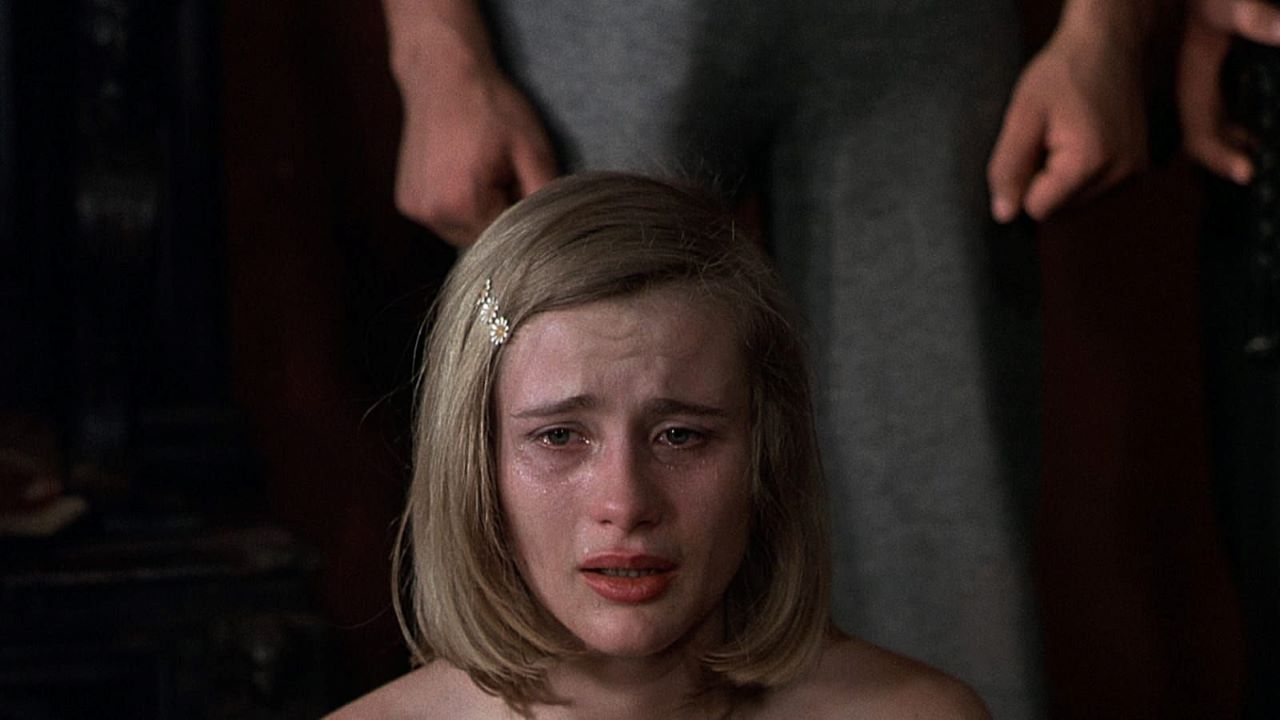
There is no place for
justice within the world of «Salo». Some perpetrators may face consequences
when regimes fall, but most others will quietly dissolve back in the civilian
world. Their capacity to objectify and rationalize excess will not disappear
after a political change.
Pasolini’s film is not
for everyone. It repels and disturbs. Still, it is not about shock content – it
is about what happens when power is insulated from consequence, when pleasure
is detached from reciprocity, when human beings are treated as disposable
components within a closed circuit of privilege.

It is precisely here that
the parallel with Epstein becomes disturbing. In order to see this parallel,
you need to watch the film and answer this question by yourself.
