Showing posts with label Ancient Rome. Show all posts

Tuesday, November 25, 2014

The Age of Augustus by Werner Eck

At the age of nineteen, he wrote, he had entered Roman politics abruptly, acting «on his own initiative» and «at his own expense»

As far back as I can remember I have always been fascinated by the Roman history. When I was 12, I have read The Twelve Caesars by Gaius Suetonius Tranquillus. Frankly speaking, I read it to find out more about Roman orgies, not emperors.  At the age of 17, after watching HBO series Rome, I have developed fixation on Augustus. I have read a lot of books and Internet materials about him, but my knowledge was far from systemic. Then, at the age of 21, I have found in one bookstore The Age of Augustus by Werner Eck, which I would review now…


Werner Eck begins The Age of Augustus with overview of Augustus cult and the main document – the Res Gestae Divi Augusti («The deeds of the Divine Augustus»). The text of the Res Gestae provides a glorified self-portrait of the first princeps of Rome. Then, Werner Eck quotes the historian Tacitus who showed Augustus as unscrupulous, ruthless, power-craving individual. Each part of this book includes some quotation from the Res Gestae and Werner Eck would doubt it’s truthfulness.

Gaius Octavian, who would later acquire the title Augustus, was born in a patrician family, connected with Julius Caesar. Werner Eck makes a point that Julius Caesar saw potential in his grandnephew by making him his sole heir and recipient of the three-quarters of his estate. Nevertheless, this will was not final and Caesar planned to live longer and possibly change this document, but certain circumstances quickly made the terms of his will relevant.

The Age of Augustus portrays Augustus as clever and charismatic leader with good political instincts. The epigraph of this review is not far from truth, except for «at my own expense» part. He never backed off from political maneuver, when it was necessary. One example of such «U-Turn» is his political and military union with the Republicans in 43 BC.

Werner Eck portrays slow development of the principate. One of Augustus favorite maxims ran festina lente («slow and steady wins the race»). The author quoted Cassius Dio, who wrote in Roman History about a debate on the future of government in Rome, between Augustus, Maecenas and Agirippa. The author brilliantly explains difficult constitutional and legal matters for the common readers.

Augustus clearly understood that he could not return to Julius Caesar model, neither could he get back to the Republic. Therefore, he had decided to restore the old republic, at least in name. He cunningly used the legal mechanisms, devised by the «Roman Constition» and created or initiated his own laws and by-laws. Every lawyer would find this part of The Age of Augustus the most interesting and amusing.

Social legislation plays an important part in this book. Augustus had revolutionized the Family law of Rome by adopting harsh anti-adultery legislation and putting Romans under obligation to marry. This was the most important piece of legislation for Roman people. Werner Eck praises Augustus for changing the way of governing the Empire. The princeps has outlawed the most controversial tax practices and even allowed filing complaints about governors.

Werner Eck makes a special point about exact title of Augustus. Imperator means «victorious commander», so Augustus was not am emperor, in a later sense of this word. That is why Augustus was not am emperor; the source of his authority were provinces, delegated to him by The Senate and People of Rome, and proconsul imperium. I am personally thankful for this part, which helped me to understand Augustus legal status.   

The Age of Augustus does not forget about failures of the princeps: disastrous German campaign, periodic bankruptcy of the Treasury, cases of outward nepotism. But his rule has been summed up by these words: «None of his successors as ruler of the Roman empire could present a similar balance sheet. And what statesman of later ages could enter in competition with him?».


Enclosing, The Age of Augustus is a very interesting book for professional historians and amateurs alike. I liked it so much, that I have even translated it in Russian (no joking), now I am trying to publish it.

Sunday, November 23, 2014

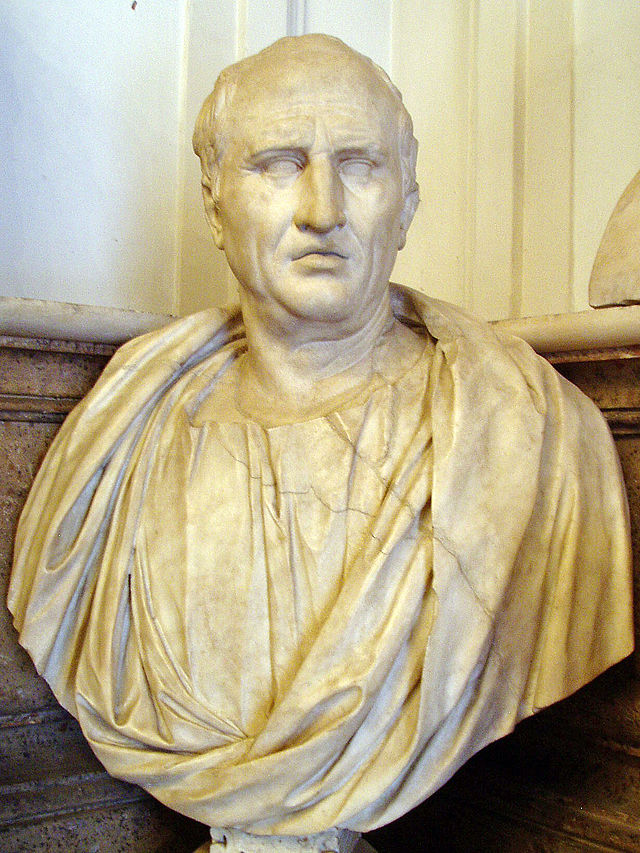
Cicero: The Life and Times of Rome's Greatest Politician by Anthony Everitt

He taught us how to think (Voltaire)

My knowledge of the Ancient History is rather mediocre, but I am a political and historical junkie with special fondness for Classics. Until recently, most of my knowledge about The Roman Republic and the Empire had come from films, TV Series, Shakespeare plays and documentaries. Therefore, I have decided to deepen my knowledge about this subject so I had started from Commentarii de Bello Gallico, The Age of Augustus, Caesar: Life of a Colossus, The Meditations by Marcus Aurelius and finally I have arrived to the Cicero: The Life and Times of Rome's Greatest Politician.


Marcus Tullius Cicero is remembered by most of the people for his works in the fields of philosophy, rhetoric, law and political science. Regrettably, most of the people, except for a few scholars, pay little or no attention to his accomplishment in the Roman politics of his time. 

Cicero was born at the time when Roman political system was constantly shaken by various political crises and licentious «saviors» were ready to conquer power at any costs, including murder. When Cicero was twenty-four Sulla launched another novice in political struggle – proscription. Nevertheless, comparing with Caesar, whose political «coming of age» were effectively at the same time, Cicero has not lost his faith in the Republic…

Anthony Everitt does an outstanding job in exploiting Roman political processes. He portrays Senate driven by self-ambition, fear of each other, struggle between optimates (nobel) and populares (people), internal division in every faction (hardcore and moderate). Roman politics were driven by personalities, rather than parties (you could find the similar pattern in the United States Senate) and the main words for Senate business were gridlock and lack of bipartisanship (you could also find it in the United States Senate). Therefore, in many aspects, judging from Everett words, if you use medical terminology, end of the Republic was not a murder, it was an assisted suicide. 

Secondly, Everitt portrays a compelling image of Marcus Tullius Cicero. Cicero was a man prone to fear, flip-flop and misjudgment. Nevertheless, Cicero also showed some political courage during his Consulship when he suppressed the Second Catilinarian Conspiracy and it was his finest political hour. After that, he had entered a long period of personal political stagnation until death of his beloved daughter Tullia, which gave him some inner steel. After that, he once again had become dominant figure but he made a crucial miscalculation about young Gaius Octavius…

One area where people constantly misunderstood Cicero is his political beliefs. Marcus Tullius was a firm believer in Republic and member of the optimates faction, so he was a conservative, not a reformer. However, he also was a pragmatic conservative, who understood the need of some change and bipartisanship, which had put him on odds with die-hard optimates like Cato (Cato reminds of Ron Paul). Cicero views were close to the Schumpeterian theory of Democracy (Generally speaking schumpeterians view democracy as the mechanism for competition between leaders and the participatory role for individuals is usually severely limited). It is not surprising that The Constitution of the United States, which was framed by Cicero admirers, was greatly admired by Joseph Schumpeter as an ideal illustration of his policy.

In closing, you could say that Cicero ideas were never realized over the span of his lifetime, but his torch has been passed to the other generations (plagiarizing JFK first inaugural) and his dream lives on (plagiarizing convention address by another Kennedy, this time Ted).

Finally, Anthony Everitt has written great book for all kinds of readers (scholars and general readers) which helps you to draw light on Cicero life, views and accomplishments and political system of the Roman Republic. Nevertheless, after reading this book switch to Cicero’s original writings (letters, speeches, philosophical works, etc.)