Showing posts with label 1996. Show all posts

Saturday, February 21, 2026

«Un héros très discret» (1996)

 The most beautiful lives are those we invent

France between World Wars. Little Albert Dehousse admires novels about heroes. His mother claims that her late husband died for France in the First World War. This story is disputed by the neighbors, but who cares? When the Second World War broke out, Albert misses his chance to be a real hero. Still, he pretends to be a writer by plagiarizing other person’s work and, in process, wins over a beautiful girl. After the war, he goes to Paris and becomes a Resistance hero.      

The collective national unconsciousness always tries to clear out some painful or shameful episodes. The post-war France adopted the legend that the populace was actively resisting occupation and only a few renegades were collaborating. Therefore, many active collaborationists avoided prosecution by claiming that they were working for Resistance. Some of them were even able to occupy important posts in the French government.

Other people claimed that they were in Resistance in order to advance themselves in the post-war society. Albert Dehousse luckily places himself into collective rewriting of history. He starts out by appearing in newsreels with returning POWs and frequenting reunions of old resistance fighters. There he hears war stories and begins constructing his heroic biography. Albert is very successful and he is able to enter the circle of high-ranking persons.

Why this film was released in 1996, if the war ended 51 years ago? One of the reasons was that France was rocked by Maurice Papon trial. He was a collaborator who, among other things, organized deportation of Jews, but after the war he was able to escape prosecution by reinventing himself as a loyal Gaullist. He occupied many important posts, including Prefect of Police in Paris and Minister of Budget.

Of course, Albert was not complicit in any war crimes. He is portrayed as a person with a vivid imagination, who is able to successfully reinvent himself. The post-war France desperately needed a lot of new heroes and he was able to ride that wave. Only one day his heroic credentials will be put to a real test. Will he be able to pass that test? I will not spoil it.

The film captures well the contradictions of the French society. The film director inserts a lot of interviews with historians, writers and war veterans, and they all give a very confusing portrayal of Albert’s so-called heroic deeds. What about the hard truth? It is not very popular, if you able to reinvent yourself and make others to believe in it. Such Alberts were all over Europe, even in the Soviet Union.

«Un héros très discret» is a very good film about rewriting of history. Watch it and then read some real post-World War Two stories. I bet you, that that you will find that postwar Europe was full of Alberts - men who reinvented themselves and were believed because society needed to believe.

Friday, November 29, 2024

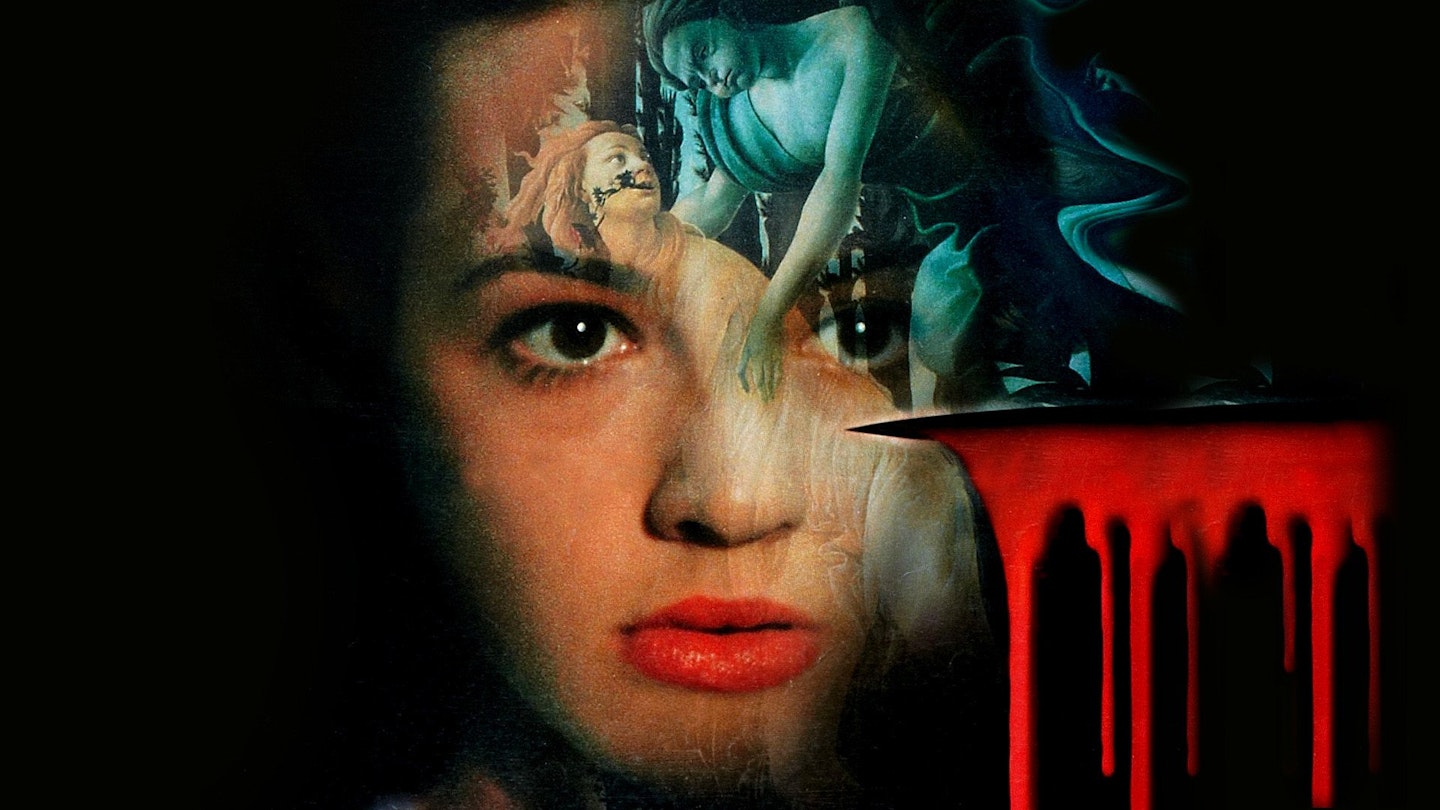
«The Stendhal Syndrome» (1996)


A decent thriller, which lacks the magic of «Profondo Rosso» and «Suspiria»


From his birth Dario Argento ate, slept and breathed cinema. He started out as a film critic and when the time was right, he made his first film («The Bird With The Crystal Plumage»). His father (famous producer Salvatore Argento) produced the debut motion picture, and its success launched Dario’s career. Asia Argento started out as an extra in the films of Dario’s friends and when the time was right she took leading roles in her father’s pictures. What can we say about their second joint picture («The Stendhal Syndrome»)?

 Detective Anna Mani travels to Florence in order to get the leads on whereabouts of a notorious serial killer and rapist. While visiting the Uffizi Gallery she is overwhelmed by a painting and passes out. The killer uses it and subjects Anna to a bizarre psychosexual torture and, strangely, doesn’t kill her. Traumatized Anna is granted medical leave, but she gains the upper hand when the maniac strikes again. The murderer is presumed dead, nevertheless the killing spree continues. Who is the new culprit?


The art projects, among other things, the fears, desires and impulses, including the darkest, of the author. The spectator often projects his own experiences on the viewed art object and, from time to time, he becomes really overwhelmed by it. One of the most extreme viewer’s conditions is called the Stendhal syndrome (when the person can even faint or hallucinate when exposed to artwork). In addition, certain serial killers saw themselves as artists and their «art» inspired new murderers.

 As in his earlier films, Dario Argents explores the theme of repressed victim’s memories, which are triggered by traumatic experience. Still, he leaves a lot of question marks. Was Anna abused as a child? Did Anna run away from her hometown or she just wanted to start the police career in a bigger city. The answer is up to the viewers’ projections. Anna’s profession leads to another interesting point.


 Police work, generally, is considered masculine and the female police officers are often seen as males with long hair (to pit it mildly). In the beginning of the film, Anna looks like as a stereotypical defenseless girl and the colleagues treat her as a little sister. After the traumatic event she tries to project aggressive masculinity, but it doesn’t bring the desired result. So, she assumes the personality of a blonde to full the authorities, romantic interests and future attackers.

 Still, the main question is – was the Director able to fully execute this interesting material? The answer is both yes and no. Asia Argento convincingly portrayed a tormented woman, the maniac will give violent chills to the viewer and the plot will surprise with few interesting turns. Nevertheless, the film lacks the flare and magic of earlier Dario Argento’s art. It doesn’t fully captivate the viewer; it doesn’t have memorable music; it doesn’t play sophisticated games with a viewer’s mind, and it doesn’t provide you with some truly memorable scenes.


Summarizing, «The Stendhal Syndrome» is a decent, but not so memorable thriller. If you want to see the real Dario Argento, then watch «Profondo Rosso».

Thursday, February 2, 2017

Panna Nikt

Panna Nikt

In 1996, Andrzej Zulawski shot his «film without mask» - Szamanka. The same year, Andrzej Wajda shot his own film on the post-socialist Poland – Panna Nikt. The critic consensus always was that Andrzej Wajda was a master of the political, historical and societal films. But it is not entirely true, even judging by my limited acquaintance with the Wajda’s films. Not counting Panna Nikt, I have seen six films of Andrzej Wajda. Among them, there is a sarcastic comedy about a loser (Polowanie na muchy) and his own «8 ½» (Wszystko na sprzedaz).

Of course, the choice of a seventy-year old (back than) director is rather surprising – a teenage drama. This genre has known failures by young filmmakers, what can seventy-year old man shoot about the youth?


The early post-socialist history of Poland and Russia knows many similarities. You could merely name the nouveau riche culture, the economic shock therapy and the fast breaking of the old societal norms and customs. During the Socialism the major advantage was power, during the Capitalism the advantage shifted from power to money. Of course, the cities were the most affected by this and the villages were more conservative.

Andrzej Wajda showed this shift in the history of a 15-year girl called Marysia, who moved with her family from the village to the city. In the beginning of the film, Marysia symbolizes the Catholic and Conservative Poland. After moving to the city, Marysia starts associating herself with new Poland. The first act of her transformation deals with her haircut. If in the beginning she has traditional long hairs, in the city she changes it to a short haircut.


Any revolutionary changes are characterized not by merely economic and political changes, but also by conformity of old-timers. Andrej Wajda portrays this change in a teenage group. Marysia wants to morph in the new society and even abandons her name and adopts her new nicknames – Minka and Maika.

The new era is symbolized by new morals (or in some cases – the lack of it) and imaginary mixing of different classes. Marysia is fascinated by financial independence of her new girlfriends; she becomes an ardent pupil in permissiveness. She even thinks that she is truly accepted by the nouveau riche circles. Nevertheless, she forgets an old lessons – the rich could temporarily embrace the poor, but they will treat the late as an equal.


The 1990s got a profound impact on the Eastern European cinema. After getting the freedom, a majority of directors began shooting films about crime and sex. But there are some exceptions. Andrzej Wajda was no longer obliged to shoot film with hidden messages (quoting Andrzej Zulawski: «the films with masks») and he made a portrait of new Poland. He showed the teenagers, because one day they will become rulers.

The seventy year old filmmaker did something, which is not possible for some twenty year old man. Andrzej Wajda portrayed the real teenage relationship, without exaggerating or softening. Everyone would see themselves or some friends in Marysia, Kasia and Ewa. I recommend to watch this film to anyone, who was born in the 1980-1990s.


Sadly, the thought of Wajda that «no, the ashes does not hold the glory of a starlike diamond» is still quite truthful.

Sunday, October 23, 2016

In memory of Andrzej Zulawski (Szamanka)

A film without masks

The American DVD edition of Szamanka includes an interview with late Andrzej Zulawski. In this interview, the Director said that a lot of films wear some so called «masks». The theme of «masks» is also present in the films of Andrzej Zulawski. As example, the Director said that Diabel was a result of his reflections on the idealistic Polish youth, who were tricked by the hardliners in the Polish Communistic party. Their protests were the reason for a 1968 conservative backlash in Poland. If you remember, Diabel shows the late XVIII century Poland – the moment when Poland lost its independence. The «mask» of Diabel was worn for political purposes, because Andrzej Zulawski shot this film in the Socialistic Poland.

In the same interview, Andrzej Zulawski said that he shot Szamanka as a film without masks. The Director wanted to shoot film, which depicts the situation in the Post-Socialistic Poland. Andrzej Zulawski  especially emphasized that he did not want to add neither commentaries, neither allegories.


Very talented blogger galina_guzhvina wrote a review on Mes nuits sont plus belles que vos jours. In this review, she made a very precise point – in order to illustrate his ideas, Andrzej Zulawski added a very French chic style to the film. In case of Szamanka, Andrzej Zulawski chose the model of La Femme Publique. If in La Femme Publique Andrzej Zulawski depicted «Paris of pimps, murderers and scum» (plagiarizing one Russian summary), than in Szamanka the Director depicted a poor and hungry Poland of the 1990s.

In the words of anthropology professor Michal: «Shamanism is one of the first religions of the human kind». If you open any encyclopedia, you will read that this religion is connected with animism, magic, totems and fetish. As in «On the Silver Globe», Andrzej Zulawski used the civilization methology of Toynbee. The Director depicted the birth of a new primitive civilization – Polish capitalistic civilization.


While I was reviewing La note bleue I made the point that this film could be characterized as an anti-biography. While I was watching Szamanka, I have decided that this film could be described as anti-erotica. Returning to Mes nuits sont plus belles que vos jours, you see in this film a lot of erotic scenes, but they are full of pain, love and beauty. Szamanka is also full of explicit scenes, but you cannot find any traces of tenderness, they remind you of animalistic copulation.

Andrzej Zulawski once said: «I believe that, with few exceptions, acting is a female occupation». Szamanka is no exception to this rule. In this film, La Femme Zulawskienne is Italian the Shaman. Italian is the archetypical Shaman who «attracts flies and people and brings death». Italian is full of primitive and primeval sexual energy. I also think that Zulawski wanted to show in Italian the new Polish man, which is cruel, ignorant and consuming.


In my opinion (I could be wrong) Andrzej Zulawski did not held favorable view towards any religion. The Catholic church is depicted as an inert force, which is desperately trying to take the place, which was previously occupied by the Communistic ideology. The brother of Michal (priest) is shown as a weak and lost man. The Director’s attitude towards priests is shown by one phrase: «If you don’t know what to do with your life, than become a priest».

In all of the films of the «Polish trilogy» (Trzecia czesc nocy, Diabel, Szamanka) Andrzej Zulawski used the theme of Apocalypse. In Szamanka, as in Diabel, the apocalyptic theme is depicted in a rather Absurdist manner. The Director shows the modern Poland, ruled by bandits and scum, who destroy their opponents with theatrical violence. While watching the violent scenes, you catch yourself on the thought, that they closely resemble the surrealistic nightmares.


In one interview, Andrzej Zulawski expressed his negative opinion towards the Polish Films of Moral Anxiety. His negative attitude towards this sub-genre was motivated by the fact that in his opinion the viewer knew and understood much more than was shown in the cinema by directors, who were bound by the communistic censure. The Director always said he doesn't make a concession to viewers, these victims of life. He thought, that the viewer should be hit with a baseball bat.

A lot of critics said that the Polish cinema died after 1989. Andrzej Zulawski disagreed with it, gave the mirror to the Polish people and made them watch. Despite the fact, that the Director was again accuses of all sins, the Polish people voted for Zulawski by money. Szamanka was one of the most popular Polish films of the 1990s and in some rural areas the priests physically blocked the entrance to the cinema.


Watch Szamanka and watch it again. Frankly speaking. I have understood this film only on the second attempt.

Saturday, September 26, 2015

Tesis

My name is Angela. They're going to kill me

How many times we watch violent films «just for fun»? How many times we think, that the best part in the news are crime reportages? How many times we think, that the people who are disgusted by violence are just pretending? How many times, when we see a crash or some other disaster we are curious to watch the real death and injuries?

When we do this, we always calm ourselves with such thoughts: «The blood in cinema is not real; It doesn’t concern us; He is just pretending; We should be afraid of alive, not dead». But what, if we would vitness the real violent death, how we would speak?


«Tesis» starts and ends with death. In the first scene, the train is stopped because of the accident and the passengers are escorted out of the station. Lots of them want to watch the dead body, but paramedics and metro employees are not allowing it. Nevertheless, the sympathies of the most spectators wouldn’t be on the side of paramedics and metro employees. Then, when Angela’s professor dies, she got a chance to witness the actual death. Angela, at the first sight, is disgusted and afraid, but it is merely the societal norm. In reality she is deeply interested and curious.

The director brilliantly portrays the irrationality of a human nature and attractiveness of the evil. Angela, after watching a snuff film and identifying the main suspect, is continuing to «play with fire» practically and erotically. As with watching death, the investigation of a murder is merely a societal norm; in reality Angela desperately wants to touch the real evil.


Angela is the typical consumer, who always wants more and more «spice». The snuff is merely a cinema genre. In the opinion of a director, snuff is only still stays in the category of a «specialty film», but one day it will be in the mainstream cinema.

Watch and think!


10/10