Showing posts with label Spanish Cinema. Show all posts

Monday, January 13, 2025

«Matador» (1986)

 Sex and Violence, Death and Silence 

An ex-matador Diego Montes has a paraphilia – he gets sexual gratification from watching female murders in the movies. He runs a bullfighting school and one of his students – religiously repressed Angel, - desperately tries to prove his manhood. The student tries unsuccessfully to rape a girl and, after that, he claims that he is guilty in a series of murders. The police commissioner is not convinced is that this neurotic kid is capable of such things, but is there any evidence to find the true murderer?

Red is the color which is associated with two things – sex and violence. The bullfighting is strongly associated with the red muleta, which is used during the final stage (the tercio de muerte or «the third of death»). Skilled matadors are rich, famous and desired by women. Nevertheless, the legalized ritual murders of animals and adrenaline addiction could seriously change the psyche of the matador and make them highly unsuitable for regular life.
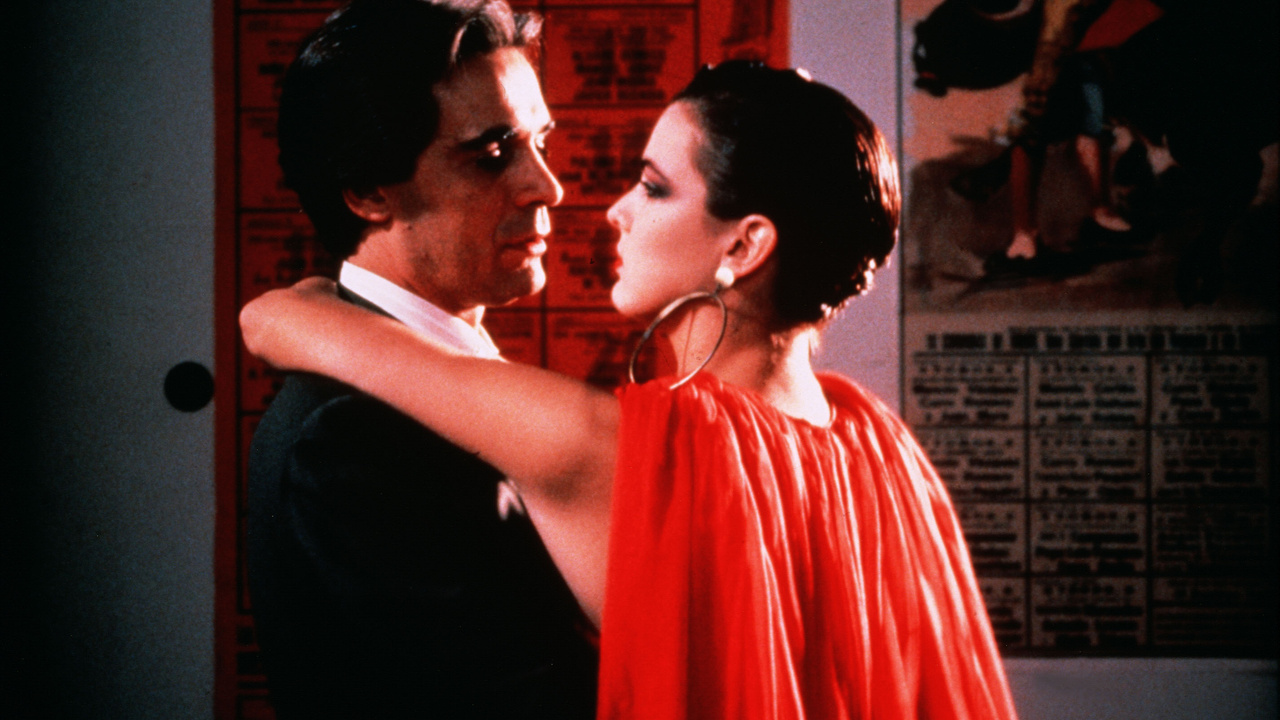
Catholic teaching is strongly against pre-marital sex and promiscuity. Angel wasn’t lucky to be born with the religious mother, who repressed his sexuality and who is constantly controlling every aspect of his life. Still, the hormones, mixed up with the distorted psyche, makes an explosive thermonuclear cocktail. It surely exploded, but who is the true culprit behind those horrific murders? Watch and find the answer.

Media could sexualize the violence, especially in thrillers and horror movies. Pedro Almodóvar distorts the traditional cliches of Italian giallo movies. In his world, the attractive women are like bulls, who are running towards the red muleta of a dangerous person. Still, there is one unusual twist, like in the best giallos of Dario Argento. I am not going to spoil it; I hope you will be as pleasantly surprised as I am.

«Matador» is a good dark comedy about sex and violence in Spain of the 1980s. If you are not very impressionable or moralistic, then check out this film.

Friday, January 3, 2025

«Operación Ogro» (1979)

Anatomy of a Perfect Political Murder


1973, an ailing Caudillo Francisco Franco still has a firm grip on Spain. He wants to ensure the durability of Francoism and makes the first step – appoints Admiral-General Luis Carrero Blanco as the Spanish Prime Minister. Caudillo plans to make Admiral as his successor and the latter is accepted by the US and by the Francoist functionaries. So, it is quite possible that Spain would remain a dictatorship for many years. Still, on the 20th of December 1973 Admiral was assassinated by a streetside bombing and the dictatorship was not able to recover from it…

Francisco Franco was a ruthless general, who didn’t hesitate to order bombing Spanish cities into submission. He was wise enough not to engage his country directly into the Second World War and he was able to cash on this, so after the war Caudillo won the support of the United States. Additionally, Franco wasn’t as war hungry as Portuguese dictator Somoza and the former was able to steer Spain into relative economic prosperity.


On the surface, Spain of 1973 was a successful European country and even the regime began to mellow a little bit. Madrid was full of happy shoppers and tourists, and the United States were giving much needed political, military and economic assistance.
Nevertheless, it was only the beautiful cover for a brutal regime which still tortured and oppressed people and tried to erase certain ethnic groups (such as Basque and Catalan).

Political terrorism will always be a controversial issue. 1970s were the golden age of political terrorism in Europe. Spain was different from Italy and Germany in that it was a real oppressive dictatorship. Is it ethical to kill an oppressor extrajudicially? The answer is yes only in the case when there are no other means to punish him (if you want another historic example – check the assassination of Reinhard Heydrich in 1942).


The Director takes a nuanced approach to this controversial issue. He agrees that it was necessary to assassinate Luis Carrero Blanco, but he makes a very important point that the violence should be renounced after Spain returned to democracy. He draws a parallel between two heroes – Izara, who renounced terrorism in favor of political struggle, and radical Iker, who remained a terrorist. I think that the Director’s sympathies are with the former.

The film also raises an important issue – are those terrorists pawns in somebody’s political game? The Director doesn’t give a definitive answer and it’s up to the viewer’s decision. Additionally I recommend you to watch «Buongiorno, notte» about the kidnapping of Aldo Moro. The latter film clearly shows how certain terrorists are used for a political gain and discarded as a used ammo.


What about the attack itself? The Director depicts it as a meticulous job by professionals, who leave nothing for a chance. In addition, the film captures the paranoidal atmosphere of Madrid, where everyone can be a snitch and success is not guaranteed at all. So, don’t expect James Bond styled villains, those people are quiet and unpretentious, who want to teach a harsh lesson to the oppressive state.

Finally, «Operación Ogro» is a very good film which tackles the controversial issue with necessary subtlety. If you like political or historical films, don’t miss this one.

Thursday, January 2, 2025

«The Spirit of the Beehive» (1973)

The haunted world of dictatorship


The Civil War in Spain has ended and some distant Spanish village tries to maintain an ordinary life. One day there is a special event – the screening of «Frankenstein». A little girl Ana is under enormous impression and, after some persuasion on the part of her older sister Isabel, starts to think that this monster is real. Is it?

In «Frankenstein» the Monster had a grotesque look, but he turns out to be an innocent creature. Still, his looks frighten people, and they suspect him of wrongdoings, and they want to destroy him. This narrative was exploited by the Francoist state or any other dictatorship to persecute everyone, who was not fit into their definition of normalcy (Republicans, Communists etc.). People also don’t want to do anything with the enemies of the state, and they will never accept them.


The human and collective psyche always tries to substitute horrible external with some tolerable inner world. Some adults go into «internal emigration», such as writing letters to imaginary lover (Anna’s mother) or spending all time with bees (Anna’s father). Nevertheless, they are still surrounded by the Francoist Spain, which resembles a wasteland after a very brutal war.

What about children? They cannot apply sophisticated psychological mechanisms and they grow up in contaminated atmosphere. Ana doesn’t understand this new world and she, like a girl in «Frankenstein», sympathizes with so-called monsters, but she cannot do it vocally. So, basically, she got two options – accept the ideology or grow estranged from her conformist family. What would she choose?


The film was released during the last years of Francoist Spain, so the author had to be very careful with critiquing the regime. The viewer won’t hear any vocal diatribes against the regime, but he will absorb it visually. The Director shows a wasteland, which doesn’t connect with the beautiful tourist image of Spain. Additionally, he employs metaphorical language, including the abovementioned Frankenstein and bees’ hive.

This subtleness creates a very haunting image of a sick society and it is more understandable to the viewers, then some words about brutality and lawlessness of a particular dictatorship (especially for those viewers, who never experienced it). Watch this old film, because it still makes a very disturbing impression.

Saturday, September 26, 2015

Tesis

My name is Angela. They're going to kill me

How many times we watch violent films «just for fun»? How many times we think, that the best part in the news are crime reportages? How many times we think, that the people who are disgusted by violence are just pretending? How many times, when we see a crash or some other disaster we are curious to watch the real death and injuries?

When we do this, we always calm ourselves with such thoughts: «The blood in cinema is not real; It doesn’t concern us; He is just pretending; We should be afraid of alive, not dead». But what, if we would vitness the real violent death, how we would speak?


«Tesis» starts and ends with death. In the first scene, the train is stopped because of the accident and the passengers are escorted out of the station. Lots of them want to watch the dead body, but paramedics and metro employees are not allowing it. Nevertheless, the sympathies of the most spectators wouldn’t be on the side of paramedics and metro employees. Then, when Angela’s professor dies, she got a chance to witness the actual death. Angela, at the first sight, is disgusted and afraid, but it is merely the societal norm. In reality she is deeply interested and curious.

The director brilliantly portrays the irrationality of a human nature and attractiveness of the evil. Angela, after watching a snuff film and identifying the main suspect, is continuing to «play with fire» practically and erotically. As with watching death, the investigation of a murder is merely a societal norm; in reality Angela desperately wants to touch the real evil.


Angela is the typical consumer, who always wants more and more «spice». The snuff is merely a cinema genre. In the opinion of a director, snuff is only still stays in the category of a «specialty film», but one day it will be in the mainstream cinema.

Watch and think!


10/10