Showing posts with label French Cinema. Show all posts

Saturday, April 4, 2026

«Au Revoir Les Enfants» (1987)

 Stop acting so pious. There's a war outside

In 1974, Louis Malle released «Lacombe Lucien» - a film that made France to confront itself during World War 2. 14 years later, he decided to revisit his childhood memories and made «Au Revoir Les Enfants». What can we say about it?

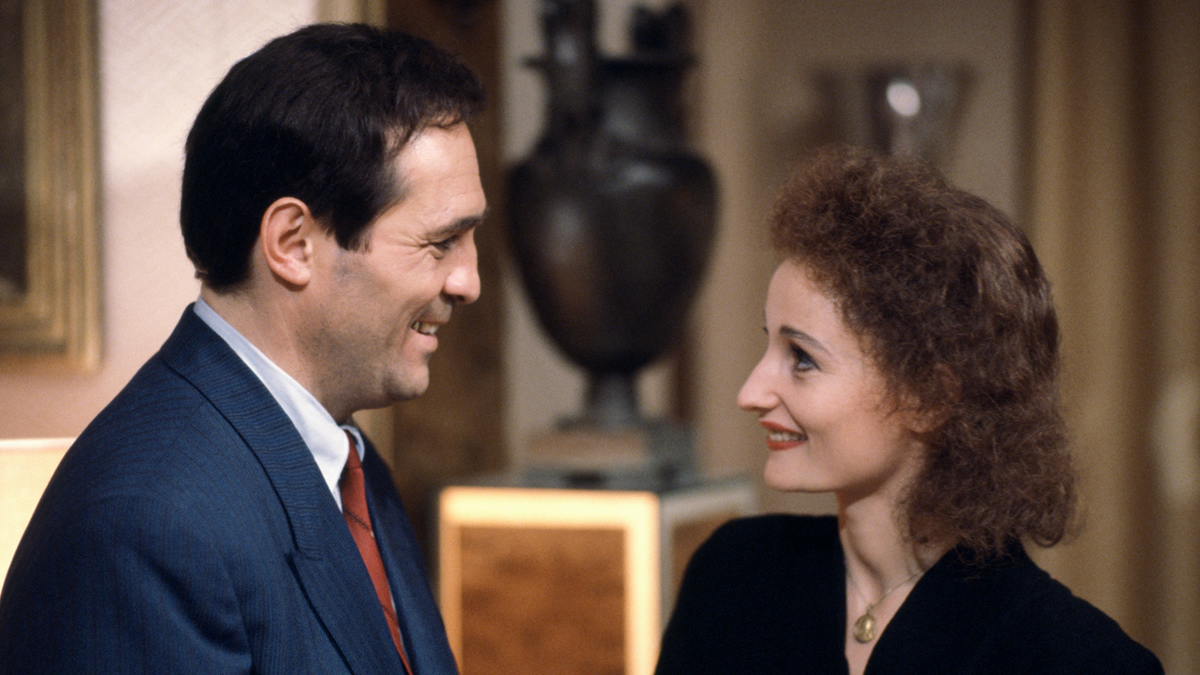
Winter of 1943-1944. A descendant of a wealthy Parisian family Julien Quentin returns to his Catholic boarding school. Everything goes as usual except for arrival of three new students, including Jean Bonnet. The new boy raises suspicions because he does not eat pork and bathes separately from others. Maybe he is a Jew…

The Director portrays a life of a boarding school in occupied France. The students lead a relatively privileged life; they are fed well and does not fully understand and grasp the scale of raging war. They despise the German troops and collaborationists and repeat the propaganda clichés about filthy Bolsheviks. For them Jews are outsiders and, in reality, they do not care about them.

During Holocaust in France, the French society often distinguished between «Les Israelites» and «Les Juifs». The first category was considered French with a different surname and they were accorded compassion and possible protection; the latter category was treated, in the best case, with indifference and, in the worst case, they were handed to Gestapo.

As in «Lacombe Lucien», Louis Malle does not try to paint the history brighter than it was in reality. The French society is trying to lead an ordinary life and the worst among them are trying to profit from it or join the collaborationists. The film avoids simple caricatures, even in its portrayal of German soldiers.

The Christian theme played a prominent role in Nazi propaganda. The Nazis tried to portray the war as a noble Christian Crusade against godless Judeo-Bolshevism. Obviously, the Christian themes became compromised in the minds of certain Europeans, including students of this particular boarding school.

The children are not interested in boring sermons about compassion, charity and corruption of wealth. In reality, they should listen to it, because their teachers are living those values and not using them as a propaganda tool. One day they will understand it and it will haunt them for the rest of their lives. But what can children learn about courage, if their parents are passive? The answer is up to you.

«Au Revoir Les Enfants» is a haunting film about real Christian values and a genuine moral courage of a few. Watch it and think.

Saturday, February 21, 2026

«Un héros très discret» (1996)

 The most beautiful lives are those we invent

France between World Wars. Little Albert Dehousse admires novels about heroes. His mother claims that her late husband died for France in the First World War. This story is disputed by the neighbors, but who cares? When the Second World War broke out, Albert misses his chance to be a real hero. Still, he pretends to be a writer by plagiarizing other person’s work and, in process, wins over a beautiful girl. After the war, he goes to Paris and becomes a Resistance hero.      

The collective national unconsciousness always tries to clear out some painful or shameful episodes. The post-war France adopted the legend that the populace was actively resisting occupation and only a few renegades were collaborating. Therefore, many active collaborationists avoided prosecution by claiming that they were working for Resistance. Some of them were even able to occupy important posts in the French government.

Other people claimed that they were in Resistance in order to advance themselves in the post-war society. Albert Dehousse luckily places himself into collective rewriting of history. He starts out by appearing in newsreels with returning POWs and frequenting reunions of old resistance fighters. There he hears war stories and begins constructing his heroic biography. Albert is very successful and he is able to enter the circle of high-ranking persons.

Why this film was released in 1996, if the war ended 51 years ago? One of the reasons was that France was rocked by Maurice Papon trial. He was a collaborator who, among other things, organized deportation of Jews, but after the war he was able to escape prosecution by reinventing himself as a loyal Gaullist. He occupied many important posts, including Prefect of Police in Paris and Minister of Budget.

Of course, Albert was not complicit in any war crimes. He is portrayed as a person with a vivid imagination, who is able to successfully reinvent himself. The post-war France desperately needed a lot of new heroes and he was able to ride that wave. Only one day his heroic credentials will be put to a real test. Will he be able to pass that test? I will not spoil it.

The film captures well the contradictions of the French society. The film director inserts a lot of interviews with historians, writers and war veterans, and they all give a very confusing portrayal of Albert’s so-called heroic deeds. What about the hard truth? It is not very popular, if you able to reinvent yourself and make others to believe in it. Such Alberts were all over Europe, even in the Soviet Union.

«Un héros très discret» is a very good film about rewriting of history. Watch it and then read some real post-World War Two stories. I bet you, that that you will find that postwar Europe was full of Alberts - men who reinvented themselves and were believed because society needed to believe.

Thursday, January 9, 2025

«Emmanuelle» (2024)

 Mélodie d'amour chante le coeur d'Emmanuelle


There are films which will hardly impress the modern viewer, but they are very important in the history of the cinema. One of such films is the very first Emmanuelle by Just Jaeckin, which even got X-rating in the initial American release. Nowadays, this film is suitable for a kid, who graduated from the first grade in the elementary school.

There were numerous sequels and rip-offs, but most of them are not even worthy of googling. What about a remake? Not even one until 2024. How can you reshoot a film from an age, when the Sexual Revolution just started, and people were much more impressionable. Sounds funny, isn’t it? I think so too, but I have decided to satisfy my curiosity. Was it worth it?


No, absolutely not. The author completely lost the spirit of the original novel. The novel, if you are oversimplifying it, was about a woman who is discovering her sexuality in the Orient (Thailand). This time it’s about a woman who comes to Hong Kong to check the luxury hotel and who just gets laid by some irrelevant persons. Sounds interesting or tempting? Absolutely not.

What about beautiful scenery? The original «Emmanuelle» movies always took you for a ride in some beautiful parts of the world (Thailand, Hong Kong, Seychelles, Brazil). This time we see only the lobby and the rooms of the luxury hotels and some generic streets and cafes. Yes, you could watch beautiful landscapes on YouTube, but if you want to remake a film, at least take something good from the original (it’s beauty).  


Actress? Silvia Kristel wasn’t a bombshell, but she captured the childish naivete and innocence of Emmanuelle, who becomes a clay in the hands of her husband Jean and Mario and turned into a devotee of free love. Noemie Merlant doesn’t radiate anything, and all her scenes only make you yawn from boredom. I think Naomi Watts would have been better Emmanuelle; she got much more spark.

Sex? Of course, modern viewer have seen everything in the high school, but nothing beats the sensitivity of the first four Emmanuelle films. In this film sex is boring and mechanical and it feels like almost real sex in night club’s bathroom. We want to watch these films for some escapism, and we need some good music for it, which is also absent in the film. Additionally, there is no playfulness in it and the film tries to present its story in serious way or maybe the director hasn’t realized what kind of story she wanted to give.


The tagline for original «Emmanuelle» was «X was never like this». It perfectly captured the spirit of the film, which was, despite its adult film rating, a playful and beautiful story without excess on physiology, and you could watch with your girlfriend. The new «Emmanuelle» failed in everything, and you could watch it with your girlfriend only in one case - if you are both suffering from insomnia.

Better check out «Supersex» - a funny Netflix-series about Rocco Siffredi.

Thursday, October 24, 2024

«Edith and Marcel» (1983)

Tonight all France is boxing/singing with you

Two symbols of France – Marcel Cerdan and Edith Piaf, - started to make their name in history on the eve of the Second World War. Then, in 1948 they met in New York City and started their ill-fated romance (if you quote Hymne à l'amour «nous aurons pour nous l'éternité...»). Nevertheless, the film was panned by the critics. I don’t understand why.

«Edith and Marcel» captures the spirit of that age and the sweet melancholy of Piaf’s song. They are two completely different people – capricious bohemian Edith and silent fighter Marcel, - but their ride is filled with joy and immature silliness. Nevertheless, we all know what will happen on the 28th of October 1949.

Still, the film is not biographical, like «Le Bon et les Méchants», it is more a fantasy trip on the basis of real events. The film is filled with the symbols of that age, including «Gone with the Wind» and love letters between persons separated by long distance. To add a little touch of how ordinary people invent their phantasy life, Claude Lelouch supplements the parallel line of love story between POW Jacques Bonhomme and aristocratic Margot de Villedieu.

Summarizing, «Edith and Marcel» is long and engaging voyage. I could say only one thing - don’t hesitate to take that voyage with Edith and Marcel.

Saturday, October 12, 2024

«Mr. Klein» (1976)

We've been French and Catholic since Louis XIV!

1942, Paris. Unscrupulous art dealer Robert Klein makes desperate French Jews to pay peanuts for priceless objects of art. He is quite content with his life until he is mistaken for a Jewish namesake. From that moment, he desperately needs to prove his non-Jewish heritage or the consequences will be horrific.

During the Nazi occupation, the French people retained, for the time being, some civil rights (or, at least, the resemblance of it). Frenchmen, who was not engaging in some subversive activities, were left alone by the Nazis. Still, one slip (such as contact with the undesirable) – and the person could end up in the collaborationist French police or, even worse, in the Gestapo.

In the post-war West Germany, all the blame was shifted to the SS, and Wehrmacht was portrayed as noble descendants of the brave knights, who were honorably doing their job. Post-war France adopted another legend – the French society was actively resisting occupation and collaborationists were just a few renegades.

Still, the reality was far from this fiction. During the film, there is almost no German character, and most of the dirty work is done by the Frenchmen (police officers, unscrupulous dealers and etc.). Parisians are trying to lead an ordinary life and, the most despicable among them, is trying to make a profit from the plight of others.

Any dictatorship and totalitarian regime always seek to brand certain categories as enemies. It could be a social class, a race or something else. Such people are completely cancelled. First, they’re stripped from their rights, secondly, they’re completely excluded from society and, finally, they’re stripped from their freedom or, even, from their life. Such process starts on a mere suspicion and when Robert Klein is suspected in being Jewish, his life starts to disintegrate.

What aides dictatorship? Collaborationism? To a certain amount, yes. Dictatorship is aided most by apathy and indifference. The plight of the oppressed is accompanied by the silence of the rest. Those who retain some resemblance of dignity will stay silent, those who don’t have scruples will take advantage of the cancelled person.  


Will Robert Klein prove that he is French and Catholic? Watch and find out the answer. «Mr. Klein» is a powerful story about the triumph of evil in an apathetic society. See this film and think carefully about the message.

Sunday, May 5, 2019

"Betty" (1992)


Pauvre Betty

Claude Chabrol had one problem – he made too much films and, because of that, somehow quantity began to dominate over quality. Claude Chabrol made masterpieces («Violette Noziere»), good films («Poulet au vinaigre») and mediocrities («La fleur du mal»). In what category you could place «Betty» - the last film of Chabrol with Stephane Audran?

In some Paris bar, a girl called Betty, who is wearing a rumpled Chanel suit, is drinking herself to death with whiskey. Some strange man, who calls himself a doctor, offers Betty a ride to a restaurant called Le Trou (The Hole). In this bar, Betty drinks even more, and meets a proprietor Mario and his lover Laure. Betty tells Laura that she was divorced with a son of a very rich and influential family.


At first, the film starts as a typical story about a poor peasant girl, who is thrown out by the spoiled prince. Claude Chabrol shows us a sad alcoholic and abandoned girl with harsh psychological childhood traumas – an ideal candidate for the couch at psychoanalyst’s office. And this family of rich bastards, who made Betty to waive her parental rights, is out to be guillotined as in the late XVIIIth century France.

There is a banal saying about incompatibility of people from the different parts of the society (classes, groups and etc.), that is why a dream of «marrying the prince» doesn’t always realized as wanted. Betty was able to jump above her head, but she an intruder in the world of aristocracy. She cannot live on the rules of the high society, family doesn’t quite accept Betty and she is even basically separated from the children, who are given to the maid.


Disorderly Betty is suffocated in such sterile atmosphere and she is thrown out as an alien element. After Betty enters Le Trou, full of desolate people, the Director starts adding extra colors to her portrait. Because of that, the viewer could get a quite different opinion about a poor peasant girl.


What could you say about real qualities of Betty? In order to answer that, you ought to watch «Betty» and break the cliché that the nature relaxes on the children of the talented (on example of Marie Trintignant). Because of the duo of Marie Trintignant and Stephane Audran, Claude Chabrol was able to shoot a great film with unpredictable ending, which is quite a match to «Violette Noziere».


Saturday, April 27, 2019

"Le Crabe-Tambour" (1977)


Honneur et Patrie

In 1940, France was occupied by the Third Reich. After that, the country was plagued by civil war, which was, mainly, in French consciousness. The French officer corps was also affected. Some officers swore allegiance to Marshal Petain; some joined the Free French. After the war, the French was labelled as cowards (which was spread by Americans and not by Germans).

In the 1950-1960s France took part in brutal war in Indochina and Algiers. The fighting officers had to deal with new plague – hostility. The newspapers were full of articles that «The French Female Union is with Vietcong» , the officers were treated as criminals. Despite that, the French Armed Forces almost succeeded in destroying the insurgency. On the 1st of June, 1958, Charles de Gaulle was appointed as the Prime Minister and the French officers were overjoyed.


After taking office, on the 4th of June, Charles de Gaulle went to Algiers. The joyous crowd applauded the General and de Gaulle said the following words to the crowd «I understood it» (Je vous ai compris). A lot of French thought that de Gaulle would save the French Algiers. When officers found out, that de Gaulle started negotiations, the officers, along with the population, were divided once more.

Fighting officers, including such illustrious men, as the most decorated General Raoul Salan and the youngest Air Force Lieutenant Colonel Jean-Marie Bastien-Thiry joined the mutiny, and proudly faced prison or execution. Other officers stayed away and continued to serve in the military, but some of them were plagued for the rest of the life by their weakness.


Captain of destroyer Jauréguiberry found out that he got lung cancer and he understands, that he is days are counted. Before death, he wants to sail for the last time and he encounters an old acquaintance – military doctor Pierre. Destroyer escorts the fishing flotilla to Newfoundland, but the Captain wants to meet for the last time one of the «lost soldiers» - Navy Lieutenant Willsdorff, more knows as «Le Crabe-Tambour».

Who could be considered an officer. Officer is a man, who always acts with his honor, integrity and loyalty (quoting the Code of the French Soldier). If an officer gives his words, no circumstances could force him to break it. And the important of all – the real officer would always be remembered by soldiers and people alike, even if the life would force him to poverty.


Navy Lieutenant Willsdorff is the real officer. He perfectly knows the military science, he is respected by officers and soldiers and he is «consciousness» - black cat – became legendary. In any situation, including Vietcong prison camp and African slavery, Lieutenant Willsdorff always saves his face. And the most important of all – he is loyal to the French nation, not to the French politicians. When his brother is killed in Algiers, he transfers to the parachute regiment and joins the mutiny.

During most of the film, we will see Lieutenant Willsdorff as a memory but, despite that, it seems that he is on the ship. Even after he became an ex-jailbird fisherman, Lieutenant Willsdorff maintains his officer’s honor and stays internally young, compared to exhausted and worn-out active duty officers.


All of the battleships are decommissioned and sold for scrap or used for target practice. Almost all decommissioned ships are forgotten and left to rot near naval bases. But some ships are remembered in books and films. The same words could be applied to retired officers, some of which will always be remembered.

Pierre Schoendoerffer made an honest film about honor, courage and loyalty. Those words would resonate with anyone. I recommend to watch this film along with «La 317e Section».

Saturday, March 23, 2019

" Le Dernier Métro" (1980)


She is cruel despite herself…

When Nazi Germany occupied France Francois Truffaut was eight years old; when France was liberated Francois Truffaut was twelve years old. A film director remembered the occupied France and wanted to picture it; he was able to do it and «Le Dernier Metro» became his most successful film.

In 1942, Paris is in occupied zone. People are trying to find nourishment and to escape the reality in theaters and cinema halls. One of the theaters, led by Jew Lucas Steiner, is desperately trying to survive. A spouse of Lucas, Marion Steiner, leads the theatre and get a permit to stage a Norwegian play. She is trying to save the theatre and the group and to hide the biggest secret – that her husband is living in a theatre’s cellar.


French cinema has films, which portrays one of the most controversial aspects of the French history – Second World War. «Lacombe, Lucien» portrays the general collaboration of the French society and work of minor collaborators; «Le Bon et les mechants» portrays the segretion of French underworld and police forces; «Au Revoir, Les Enfants» portrays the culture of betrayal, «Une Affaire de Femmes» portrays the hypocrisy of the Vichy France; «Un héros très discret» portrays the attempt of French consciousness to rewrite the Second World War page.

«Le Dernier Metro» portrays the French society as a whole and theater world. In September of 1942, it is still unknown whether the Allies would win the war and, if so, when France would be liberated. That is shy a lot of Frenchmen are mostly concerned with means of survival. Someone deals on the black market, someone is suing theatre costumes at home, someone is acting in propaganda films.


At the same time, the occupational authorities are beginning to put people against each other in order to better manage them. That is why snitching becomes the acceptable way to promote yourself. From every corner people hear stories about how Filthy Jews are ruining the Great France and almost everyone is afraid that someone would snitch on him that he is a Jew.

Sergei Dovlatov was absolutely right about his words «who wrote four million snitches?». Strangely, the officers of Wehrmacht are portrayed rather better, than some of the Director’s fellow countrymen. All power in France is in hands of scum, who are using propaganda as a mean of destroying their adversaries. One such voluntary collaborators is a disgusting theatre critic Daxiat, who wants to take over all theaters, including Steiner’s theatre.


From the other side, Marion Steiner and her colleagues are forced to walk on the knife edge in order to save the theater. They are forced to insert clauses into contracts that none of the actors are Jews, get censor’s visa on plays and humiliate themselves with Daxiat and other scum. Marion Steiner is forced to be «the most fervent Catholic» in order to save her husband from concentration camp.

This forced collaboration of Marion Steiner is met with ire from her colleagues, including young Bernard Granger. A member of Resistance Bernard at first considers Marion as a cold and indifferent woman and willing collaborator; later, strangely, they start to develop mutual feelings. Nevertheless, Marion cannot put at risk her colleagues.


The main enemy of any dictatorship is a free art. We all remember famous photos of book burnings in Nazi Germany. Any dictatorship is afraid of free art, because it enables to show to the people the incompetence and impotence of any «Great State». That is why almost any independent piece of art is immediately banned, but most of the censors are stupid and you could bypass them by coded language.

Francois Truffaut reminds us about a role of real art as an antidote to cultural barbarity. In staged play, there is coded message about prevailing hypocrisy and double speak and remind about a need to save humanity until the inevitable good times. The Director doesn’t judge such people, as Marion Steiner, who is forced to do unpleasant things in order to save the loved ones; the Director is judging only such scum, as Daxiat.


The Director was able to shoot an important film about a need to preserve your soul in dark times and about a sheer power of the real art. Only those people, who saved their souls, apart from «few scratches», would come back to the liberated scene and get real applause. I recommend to watch «Le Dernier Metro» with some of the films, which I mentioned in the second paragraph.

Monday, March 18, 2019

"Trois couleurs : Rouge" (1994)


Fraternite

There are certain encounters (even the short ones) in our life, which catalyzes the most profound changes in our life. 10 years ago I have met a person and we were chatting on different themes and I felt, as if I have known this person for 1000 years. My foolishness was the reason why I lost this person, but I was given a very important last message: «You’re one of those, who consider themselves cynics, but you still didn’t have enough of life. In 10 years you would probably understand me».

I understood those words much earlier, but I have got a chance to say it to this person. That acquaintance lasted for about three weeks, but it was a case for a «full reboot» of my system. I would be glad, if the life of this person would be good, because without this wisdom, I would be still a complete life fool. You would ask me – why am I torturing you with my biography? I am doing this, because even during the first viewing of «Trois couleurs: Rouge» I recalled all acquaintances, which caused the profound effect in my life.


A lot of our life events are dictated by accidents. One negligent word, which causes the mist profound harm to another man; one accidental encounter in unusual place, which causes the most profound changes in our life; acceptance to University, about which you have never dreamed. As everything else, accidents could be positive or negative.

MSU Professor Vladimir Tomsinov always tells the law students the following: «In the law school you are indoctrinated into thinking, that all people are scumbags. You cannot trust anyone. You will be cheated or tried to be cheated by the people, whom you are allowed to do this. What king of lawyer is it, who believes in integrity and honesty of other people?»

Those words could be fully attributed to criminal judges. During their practice they will encounter such things, which would easily destroy any traces of believe in humanity. Also criminal judge, as God, has an absolute power to condemn to prison or death (the latter in some countries). Judge could condemn non-guilty and acquit guilty, but by the time of retirement they reach complete spiritual burnout.


A retired criminal judge Joseph Kern is one of those burned out men, who lost faith in everything. He developed an addiction for human scum and he satisfies it by spying on the neighbor’s telephone calls. Every day brings him closer to complete indifference and loneliness, and even runaway of his dog Rita doesn’t bother the judge too much.

A young student and model Valentine Dussaut is one of the rare type of people, who has «a beautiful soul». One night, she accidentally hits Rita with her car and bring the dog back to the judge. The Judge is not too interested in a dog and he rudely sends away Valentine, but she tells him a few words, which have the most profound effect on the judge’s soul. After some time, the Judge and Student would meet again…

I am not a big fan of poetry, but I remembered one line of «Ulysses» by Lord Tennison: « I am a part of all that I have met ». The main heroes became the «parts of each other» and unleashed the best in them. The Judge no longer feel a need to explore scum, because he regained his faith in humanity; the Students sees a lost man in need of help and not an angry and poisonous old fool. Although they cannot be together because of the huge age difference, their good deeds woulg light their life cycle.


Some critics considered «Trois couleurs» as a manifesto of a New Europe. If they meant a political union, than they were wrong, because it is not a political trilogy, If they meant a possibility for the Polish director to attract French financing in order to make film about common themes of humanity, which would be applauded on the Western film festivals, then they were right.

Krzysztof Kieślowski travelled a long path in his art. If in his first feature film he was a cynic and misanthrope, his last films shows his transformation into the highest form of humanist. The last film enables people to believe, that there are still some kind people left on Earth and their unselfish kindness create an unbreakable bond with other people.

I, as these French girl, who said to the Director about « La Double Vie de Véronique», that this film «made her to believe that soul exists» watched the film beyond the end titles and understood, that something inside of me was better. Thank you, Pan Krzysztof, for giving us the art into the highest meaning of this word. Maybe someone else would also watch the film and feel something good.

Saturday, March 16, 2019

"Comédie de l'innocence" (2000)


Tu n’est pas ma maman

Tonight is the 66th birthday of Isabelle Huppert. She started her film career in 1971 and Isabelle Huppert still keeps us pleased with her successes. She played, among others, the roles of two condemned to death women, Marie Curie, Anna Bronte, Emma Bovary and so on and so on.

In 2015, Isabelle Huppert visited Moscow theatre and I was, primarily stunned, by her stage moves. She, wearing a rather high-heel shoes, floated like a butterfly. Among her many years, I would pay special attention to 2000. In 2000, Michael Haneke finished shooting «La Pianiste» (it was released the next year), «Merci Pour Le Chocolat» (I watch it every year on her birthday) and she acted in play «Medee».


The same year, Isabelle Huppert starred in «Comedie de l’innocence» made by Chilean filmmaker Raul Ruiz. This film was rather overlooked, but it doesn’t make it worse than her more known roles. That is why, on the birthday of Isabelle Huppert, it is more convenient to recall some of her lesser-known roles.

Once, King Solomon was visited by two women with argument about a toddler. After listening to the argument, Solomon ordered to cut the baby into two pieces and give the parts to arguing women. After hearing the cry of woman not kill the child and to give it to her rival, Solomon realized who was the real mother.


One rich and affluent French family have a rather good and steady life. Serge and Ariane are celebrating the 9th birthday of their beloved son Camille. Everything goes as planned, until the evening, when Camille starts to call his mother by name and stating that he is really Paul, and they should urgently visit «the real mother». Ariane and Camille have reached the address and they encounter Isabella – a woman, who lost a son two years ago, - which happily embrace Paul-Camille and the boy calls her a real mother.

The strongest bond is a mother love. Mother loves her child unconditionally and would never abandon him or put him in harm’s way. The death of a child is one of the main human tragedies, which could completely destroy the woman’s life (at least, psychologically). The other tragedy – loss of a child or if a child rejects the mother.


The children are enjoying fantasies, including inventing new biographies and parents. Some of such fantasies are deliberate and aim to hurt the more (as in a case, when mom refuses to buy something). Usually such tantrums are short-lived, but what if child makes a claim about another mum and such claim is somehow verified?

The worst thing in such satiation is ambiguity. When child is physically sick, you know, most of the times, about proper drugs and how to nurse your child back to feet. In case of the «second mother», mum have the only course of action left – to mend fences with her rival in order not to lose a child, because such radical trial, as in parable about King Solomon, are abolished since the Middle Ages.


Every minute in such surrealistic situation is destroying Ariane’s psychic. Everything looks like as a rather bizarre nightmare, but Ariane cannot wake up and merely embrace Camille. The only option left for her is to dream about another Solomon, who would help to settle her dispute for good.

By using a rather simple means, the director was able to shoot a haunting story about a child loss. The worst is that such stories are quite real and the only hope that such Kafkaesque story would never happen to you or your close friends. Despite all of that, I would like to thank Isabelle Huppert for making this film «fly». I am impatiently waiting for release of «Greta» and again wish the happiest of birthdays to Isabelle Huppert!

Wednesday, March 13, 2019

"Giorgino" (1994)


Je t’aime mélancolie

Milen Farmer rocked the French music world of the 1980s. Music, provocative lyrics and, of course, the first rate music videos, which resembled the actual films. A talented film director and composer Laurent Boutonnat was one of the main architects of Milen Farmer’s success, because he directed those music videos and helped to stage her shows.


Since 1982, Laurent Boutonnat wanted to shoot «Giorgino». In 1992, he finally got the chance and Milen Farmer agreed to act in order to provide some «star power» to the film. The film was released… and became a box office bomb. «Giorgino» grossed about 0,5 million euros against a 12 million euros budget. The critics also destroyed the film, but was it justified?

In October 1918, an army doctor Giorgio Volli got with his regiment under gas attack and became the sole survivor. An attack severely damaged Volli’s lungs and he was medically discharged from active duty. He returns to an orphanage, in which he worked before the war, and finds out that the children were evacuated to another French village. When he makes to the village, he finds out that all children drowned and the villagers suspect, that they were murdered by mysterious Catherine.


The pyrrhic French victory in the First World War did an irreparable damage to the French nation, which became the cause of French defeat in the Second World War. By watching «Giorgino», the spectator would feel the power and verbosity of this national trauma.

A snowy village, surrounded by mountains and deep forests, symbolizes France in 1918. This village is inhabited by women on the edge of madness, who are hoping for return of their husbands/brothers/sons. The wartime cruelty turned children into jackals and one-legged priest symbolizes the phrase of Friedrich Nitzsche «God is dead» (of course in a misquoted context).


Lots of veterans and discharged on medical ground are ending up in a psychiatric asylum, which is merely a chilling alternative to quick combat death. This hell is runned by doctors and nurses, who are also plagued by wartime cruelty, are staging depraved experiments aimed at spiritually killing «rope-marked» patients, instead of healing them.

The disillusioned and bitter French people desire to find a way to channel their anger on someone and they got the motive – death of orphans. Some of the villagers are thinking that the children were killed by wolves, but most of them suspect red-haired Catherine. You should not forget that in the Middle Ages the red-haired girls were considered witches and the war is a fertile ground for the most bizarre beliefs.


On the hand, while watching the misadventures of gassed Giorgio Volli you could draw up a certain parallel with Andrzej Zulawski’s « The Third Part of the Night» and a logical question – if those events are merely the game of sick and dying subconsciousness of Giorgio. You could agree or disagree with me, but first you have to watch the film.

The War will soon end and it will not bring a joy to the nation. On the opposite, the nation would grieve for their fallen ones and experience anger, which could not be satisfied by attacking the state. Every minute of the film multiplies this mood and in the end you would also feel this pain of the French nation in 1918.


The director realized this concept by, among other things, attracting the first class actors, including Louise Fletcher and Joss Ackland. Milen Farmer was also a pleasant surprise. We all know about her great charisma, but she convincingly portrayed a mystique «red-haired witch», which is always a target in war time.

The only weak point of a movie is certain gaps, which slows down the development of tension. I think that in order to train director should have made an «easier» film before « Giorgino», but he preferred that his first film would also be his dream film. Nevertheless, it doesn’t hurt the film.


There are lots of cases, when good films flops at the box office. So, forget about box office and watch the story about real consequences of war. I think that such films are needed, because they illustrate how war is abominable and its consequences. Maybe someone would not talk and joke lightly about the war.

Saturday, February 16, 2019

"Asphalte" (2015)


Gray concrete, warehouses, empty parking

What is HLM? A big apartment building, situated is some trashy suburban area of the French city, which houses the unemployed, immigrants and other not-so-lucky. If you follow the news, you’d think that HLM is a crime-infected place and sometimes inhabitants of those projects are going to the rich neighborhoods in order to burn cars and destroy some property.

Despite that grim news coverage, you shouldn’t degrade inhabitants of the HLM to merely sociological category. Those projects are inhabited by the people, who feel the same emotions, as everybody else. Almost everyone, including heroes of the film, are experiencing or afraid of loneliness. An aged man, who refused to pay for elevator’s maintenance and who ended up in a wheelchair; a burned-out actress, who moves to HLM; teenager, who lives without parents; an old Arab woman, whose son is in prison.


Loneliness methodically wears down the man and every he loses a bit of life joy. Despite that, in the tales, and sometimes in life, the miracles are happening in the most unusual places. Like an American astronaut makes a crash landing on the HLM’s roof and an old woman would get a substitute son for a few days. Those few days could bring the joy of life to someone and understand the meaning of such words as friendship and mutual help.

«Asphalte» is a kind and positive story, which takes part in the most unusual place. Film goes only for one hour and forty minutes, but the spectator, along with the heroes, feel the same good emotions. I recommend you to watch it, you will not regret this.