Showing posts with label Krzysztof Kieślowski. Show all posts

Monday, March 18, 2019

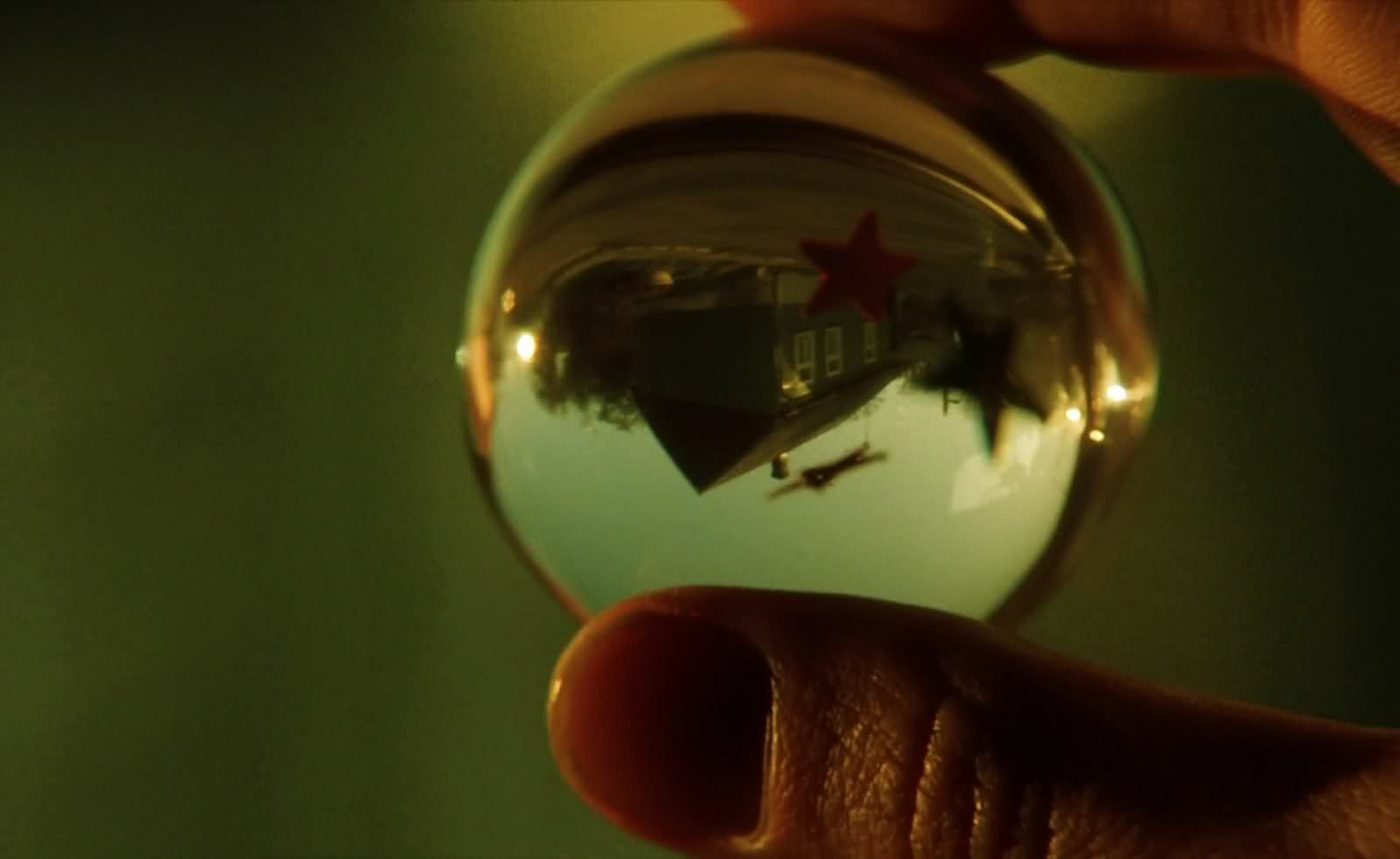
"Trois couleurs : Rouge" (1994)


Fraternite

There are certain encounters (even the short ones) in our life, which catalyzes the most profound changes in our life. 10 years ago I have met a person and we were chatting on different themes and I felt, as if I have known this person for 1000 years. My foolishness was the reason why I lost this person, but I was given a very important last message: «You’re one of those, who consider themselves cynics, but you still didn’t have enough of life. In 10 years you would probably understand me».

I understood those words much earlier, but I have got a chance to say it to this person. That acquaintance lasted for about three weeks, but it was a case for a «full reboot» of my system. I would be glad, if the life of this person would be good, because without this wisdom, I would be still a complete life fool. You would ask me – why am I torturing you with my biography? I am doing this, because even during the first viewing of «Trois couleurs: Rouge» I recalled all acquaintances, which caused the profound effect in my life.


A lot of our life events are dictated by accidents. One negligent word, which causes the mist profound harm to another man; one accidental encounter in unusual place, which causes the most profound changes in our life; acceptance to University, about which you have never dreamed. As everything else, accidents could be positive or negative.

MSU Professor Vladimir Tomsinov always tells the law students the following: «In the law school you are indoctrinated into thinking, that all people are scumbags. You cannot trust anyone. You will be cheated or tried to be cheated by the people, whom you are allowed to do this. What king of lawyer is it, who believes in integrity and honesty of other people?»

Those words could be fully attributed to criminal judges. During their practice they will encounter such things, which would easily destroy any traces of believe in humanity. Also criminal judge, as God, has an absolute power to condemn to prison or death (the latter in some countries). Judge could condemn non-guilty and acquit guilty, but by the time of retirement they reach complete spiritual burnout.


A retired criminal judge Joseph Kern is one of those burned out men, who lost faith in everything. He developed an addiction for human scum and he satisfies it by spying on the neighbor’s telephone calls. Every day brings him closer to complete indifference and loneliness, and even runaway of his dog Rita doesn’t bother the judge too much.

A young student and model Valentine Dussaut is one of the rare type of people, who has «a beautiful soul». One night, she accidentally hits Rita with her car and bring the dog back to the judge. The Judge is not too interested in a dog and he rudely sends away Valentine, but she tells him a few words, which have the most profound effect on the judge’s soul. After some time, the Judge and Student would meet again…

I am not a big fan of poetry, but I remembered one line of «Ulysses» by Lord Tennison: « I am a part of all that I have met ». The main heroes became the «parts of each other» and unleashed the best in them. The Judge no longer feel a need to explore scum, because he regained his faith in humanity; the Students sees a lost man in need of help and not an angry and poisonous old fool. Although they cannot be together because of the huge age difference, their good deeds woulg light their life cycle.


Some critics considered «Trois couleurs» as a manifesto of a New Europe. If they meant a political union, than they were wrong, because it is not a political trilogy, If they meant a possibility for the Polish director to attract French financing in order to make film about common themes of humanity, which would be applauded on the Western film festivals, then they were right.

Krzysztof Kieślowski travelled a long path in his art. If in his first feature film he was a cynic and misanthrope, his last films shows his transformation into the highest form of humanist. The last film enables people to believe, that there are still some kind people left on Earth and their unselfish kindness create an unbreakable bond with other people.

I, as these French girl, who said to the Director about « La Double Vie de Véronique», that this film «made her to believe that soul exists» watched the film beyond the end titles and understood, that something inside of me was better. Thank you, Pan Krzysztof, for giving us the art into the highest meaning of this word. Maybe someone else would also watch the film and feel something good.

Wednesday, January 4, 2017

Przypadek

Every generation yearns for light. It needs reassurance and faith…

Every man encountered events, dictated by the pure blind chance. This chance could be positive, e.g. you got drunk and were late for the plane and because of that you missed the crash; or you have went to some unplanned event and encountered an interesting man. But you must not forget the negative chances, e.g. you have said not-so-important (in your opinion) word or committed not-so-important (in your opinion) action and the cost of these is the relationship with a very dear friend or some other close man.

In 1981, Krzysztof Kieslowski made a film about how one event could influence the life of one single man. After the death of father, a young medical student Witek takes an academic gap and goes to Warsaw. The life of Witek is dependent on one event – will he catch the train to Warsaw?


The film deals with the questions of freedom, personal choice, happiness and fate. In the beginning, Witek follows the wishes of the father and studies medicine. But, before his death, the father tells Witek that he is free to choose his own path. For the first time, Witek grabs the real freedom of choice.

The political path is presented in the first two variants of Witek’s life. In the first variant, Witek joins the Polish Communist Party; the second variant deals with Witek’s life in the Opposition and his embrace of the Catholic faith as a way to gain the meaning of life. At first glance, Witek gains a success in politics, but in reality he loses the freedom, personal choice and happiness. Witek the politician becomes an instrument in the hands of others.


Krzysztof Kieslowski showed us old Communists, who were arrested in the early 1950s, but who continued to advance the Party’s case. One Communist, who inspired Witek to join the Party, left prison as a morally and physically crippled person. He is merely lecturing in the University and tries to distance himself from the political life. Another Communist – Witek’s boss, - understands the crisis of Socialism, but continues formal embrace of the ideology in order to use his experience for future reforms.

The Director shows the Opposition as a bunch of idealistic young people, who could get arrested at any time. The Director treats with the same skepticism the formal embrace of religion, which is practiced by lots of people. Do not think that Krzysztof Kieslowski was an anti-clerical man, he is merely critiquing the formal embrace of religion. The future history of Poland vindicates the views of Krzysztof Kieslowski.


In addition to the questions of freedom, personal choice, happiness and fate, the Director depicts the influence of the past. In the film the past is symbolized in two girls, whom Witek previously encountered. In the first variant this girl is Czuszka; in the second variant the girl is Werka. Witek tries to gain them back but there is an old and banal saying that you cannot bring back the past. The Director agrees with this saying.

In all three variants Paris is depicted as a mean to escape the current. In this case, the Director decides «to play the God» (plagiarizing the interview of Krzysztof Kieslowski on the Three Colors) as a fate and does not allow Witek to escape. In some cases he is merciful, in another cases he is cruel.


The Director thinks that the only way to gain personal happiness is to forger the past and stay out of politics. In the third variant of Witek’s life, he decides not to go to Warsaw, finishes the medical school and marries his school mate. Witek the Doctor, in comparison to Witek the Communist and Witek the member of Opposition, abstains from politics. Only in this variant, Witek gains the personal and professional freedom.

Krzysztof Kieslowski portrayed the Polish society of the early 1980s and the history of one young Polish man. I think that after watching the scene of catching the train, everyone would remember his own «trains». As I said before, the films of Krzysztof Kieślowski have one unique trait – they are universal.


I ask you again, let’s join and watch the films of this great master, who, unfortunately passed away too young.

Thursday, December 22, 2016

Bez konca

In which Poland?

In the mid-1980s, Krzysztof Kieślowski taught a directing class in West Germany. One day, a young German started to explain his political beliefs. Back then, the radical left groups, as RAF, were popular in the West and a young German was no exception to this. While listening, Krzysztof Kieślowski was smiling politely, but in his eyes were: «Fool, you live in a normal country!». Then the Director said the following: «Andreas, the politics is a dirty business. My only concern, only if there is enough toilet paper in the toilets».

Krzysztof Kieślowski was apolitical in his life and art. He never made politically charged cinema, never belonged to any political parties, clubs or movements. He shot films not for the sake of politics, but for the sake of people, or rather what unites them. That is why, in the socialistic Poland the Director was bullied by Communists and Opposition.


In 1984, at the first glance, Krzysztof Kieślowski changed his art model, by making a political film. If you dug deeper, behind the façade of a story about the death of a young and brave lawyer, who defended a political prisoner, lays a completely different story.

In «Bez konca», Krzysztof Kieślowski portrayed the Polish society during the rule of Wojciech Witold Jaruzelski. The Polish society portrayed as lost, disappointed and utterly pessimistic. The members of Solidarity portrayed as a crushed idealists, who are desperately trying neither to survive, neither to show the last case of obstruction. In this crushed country a tragedy of a widow starts out. She sees the shadows of her husband everywhere and nothing can help her to forget the past and continue life.


As in «Three colors: Blue», Krzysztof Kieślowski examines the question of personal, not political liberty though the history a widow. In these films, the Director asks us the following questions: can someone abandon the past and continue to live? Can suicide be interpreted as a choice of a free man and a way to escape the unbearable situation?

The other part of the film deals with a trial of a young factory worker, charged with organizing a strike. In this part steps out another important character – an old defense attorney Labrador, who takes the case after the death of Antek. The Director channels his thoughts through Labrador – if you didn’t choose death by facing the tanks during the introduction of the martial law, why are you trying to get executed now? Is it worth to fight for the sake of the crashed rebellion?


Almost every character is trying to build his imaginary life in Poland and to escape not-so-good reality. But if you try to escape reality though fantasy, the life would viciously attack you. Of course, if you read history, you would find a case to reproach the Director for extreme pessimism. But before doing that, check the release date and forgive the late Krzysztof Kieślowski. In 1984, no one couldn’t anticipate the crush of the Iron Curtain.

Before the late 1980s, Krzysztof Kieślowski was not too appreciated by snobbish western critics. His films were not accepted to the international film festivals, the Director was in a shadow of a more acclaimed Poles (as Andrzej Waida). Despite all of that snobbery, the films of Krzysztof Kieślowski have one unique trait – they are universal. Their universality means that the stories of those films are understandable for everyone. We can associate ourselves with heroes of his Polish and French films. And you can’t say the same about some films of more famous Poles.


After the success of Decalogue, the snobbish critics began their collective praise of Krzysztof Kieślowski. Let’s join them and watch the film of this great master, who, unfortunately passed away too soon.

Tuesday, February 23, 2016

La double vie de Véronique

Feelings are what link people together, because the word «love» has the same meaning for everybody (Krzysztof Kieślowski)

In 1995, Krzysztof Kieślowski was invited to Oxford University and during the interview he was asked about a role of culture.  Krzysztof Kieślowski said the following: «There are too many things in the world which divide people, such as religion, politics, history, and nationalism. If culture is capable of anything, then it is finding that which unites us all. And there are so many things which unite people. It doesn't matter who you are or who I am, if your tooth aches or mine, it's still the same pain».

Following this pattern, The Director shot in 1991 «The Double Life of Véronique». The main characters are two identical young women called Véronique, albeit one of the is the Polish and other one is the French. After looking at the year of release and remembering about politicized Polish cinema, you would expect a film about Polish renaissance. Nevertheless, the film was not shot for the sake of another political pamphlet.


The film starts with depicting two little girls – Véroniques. For the first 30 minutes, the life of the Polish Veronique is depicted: graduation from a Music College, romance, visiting the aunt in Krakow, good auditioning and offer of a professional choral career. One day, Veronique walks the streets of Krakow and sees in a bus the identical young woman. After the moment, when Véronique had chosen art over love, the film switches to the French Véronique.

«The Double Life of Véronique» deals with the importance of choice in a fast-paced life. In the film the choice is divided between two spheres – art or love? Despite the social and economical differences of characters – Véronique from a rich France and Véronique from a poor Poland; The Director shows that there are many things, outside the spheres of money and politics, which unites the people. Those things cannot be felt or sensed, but anyone can at least understand it by using the «tooth metaphore».


In my opinion, The Director also teases people, who try to make simple things look complicated; who are trying to find the second meaning in everything. The doll theatre scene is illustrating. The children are fascinated, because they can’t understand the forces which move those dolls. At the same time, Véronique is trying to find the Muppet Master and she succeeds; she can’t no more watch this spectacle as a child. The later actions of French Véronique also could verify this opinion, because the only question is «Why are you doing this»?


Watch «The Double Life of Véronique» and, even better, watch it again. Perharps this film will also touch something into you.


Saturday, January 24, 2015

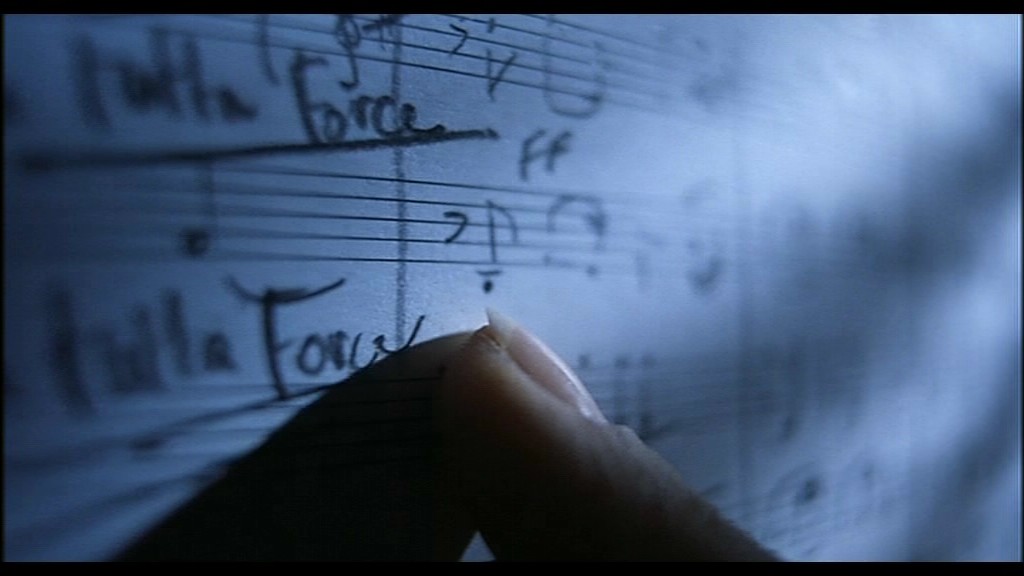
Trois couleurs: Bleu

Liberté

Julie has gone through a terrible tragedy – the death of her husband and daughter in an automobile accident. At first, she tries to kill herself, but unable to swallow the lethal dose of drugs. After being released from hospital, she decides to sell the family mansion and to move to Paris. Once in a capital, Julie tries to cut all connections to the past.


«Liberté, Égalité, Fraternité» is the national motto of the French Republic. The national flag symbolizes the words: Blue for Liberté; White for Égalité; Red for Fraternité. Of course, these words have a political meaning. Krzysztof Kieślowski has made a film about personal liberty.

Julie tries to reach the personal liberty by the means of cutting all ties with the society. This path is wrong, because «Ghosts of the past» would still haunt you. The right way of reaching personal liberty is to «look into the eyes» of your past and pass it over and through you.


The acting of Juliette Binoche could be described in one word – natural. The Actress has naturally portrayed the introverted Julie, who is coping with a terrible tragedy. Binoche gives to Julie some traits of an ordinary woman, which makes her look even more natural.

Trois couleurs: Bleu is a visually stunning and sad film, which, nevertheless, gives us some hope. The film is recommended to all cinema-lovers, it will not disappoint you.


8/10