Sunday, March 29, 2015

Indochine

In our youth we thought the world consisted of inseparable things: men and women; mountains and plains; humans and gods; Indochina and France...

The longest addition to Apocalypse Now Redux is a sequence when the crew have discovered a French rubber plantation. Despite a fact, that the First Indochina War has finished more than ten years ago and Vietnam is an independent country; the French family will defend this frontier until the last man dies. I have watched Apocalypse Now for several times and The French scene was always my favorite. That is why, I have decided to “fill the gap in my education” and watch Indochine.

In the French Indochine, Eliane Devries adopts a young girl from the royal dynasty called Camille. Because of that, the Devries Planation becomes one of the largest into the Indochinese Peninsula. After ten years, Eliane raises Camille as her own daughter and her plantation runs a huge profit. At the same time, Eliane starts an affair with young naval officer called Jean-Batiste. Everything ges as usual, until Jean-Batiste saves Camille from terrorist attack and they fall in love. Eliane tries to protect Camille and has Jean-Batiste transferred to a remote base. Camille is quickly engaged to another Vietnamese noble and communist sympathizer called Tanh. Immediately after engagement, Camille, with consent of Tanh, escapes from Saigon and goes to the country to find Jean-Batiste.
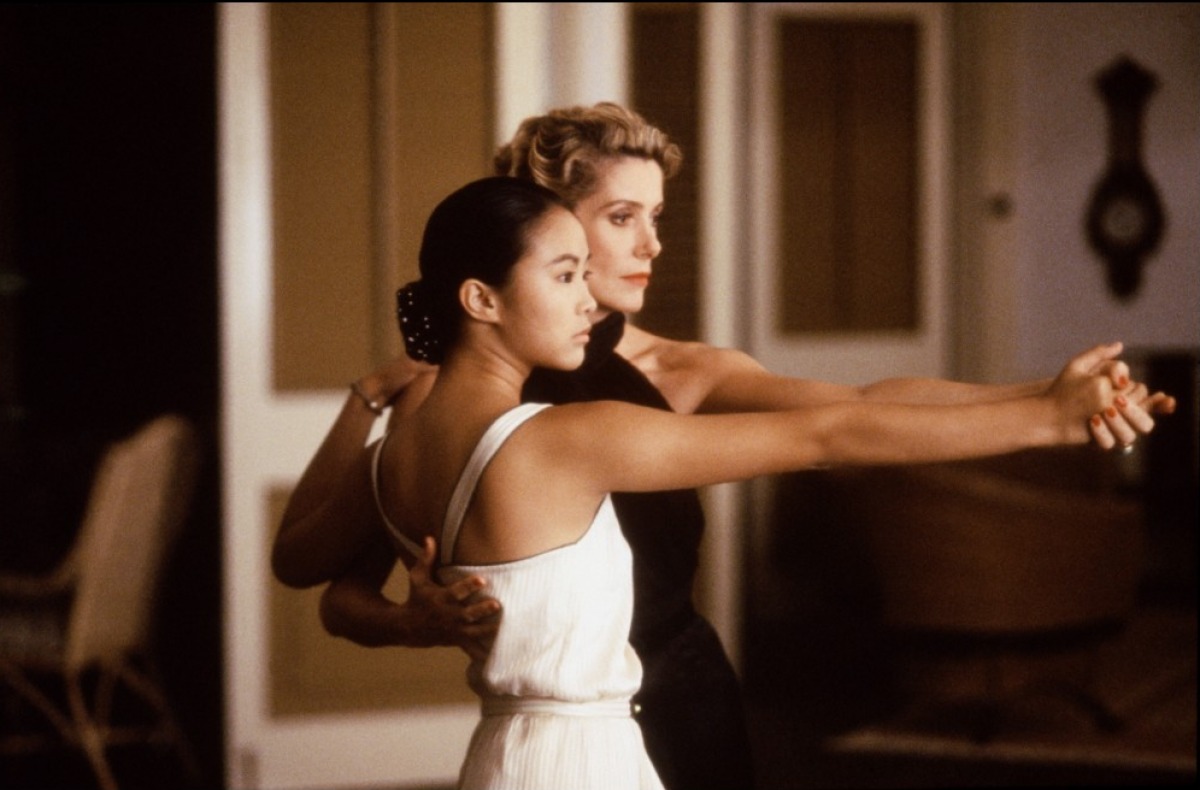


The film depicts an idyllic colonial life: huge plantation; strict, but fair, Eliane, who never punishes her workers unfairly; peaceful coexistence of French and Vietnamese elite. Nevertheless, this idyll lasts only in the plantation and, to the limited extent, in Saigon. In the wider world starts out a revolution. The first revolutionaries starts out an arsons and sabotages; carries out assassinations of collaborators. Camille after escaping her “golden cage” sees the life of her country and radicalizes.

The French society shown as inert and incapable of preventing the mounting revolution. The only hero, who tries to prevent revolution, is a head of the colonial police Guy, but his work is constantly sabotaged by lack of cooperation from Army and Navy and the Popular Front's decision to liberate the political prisoners completely ruins his work.
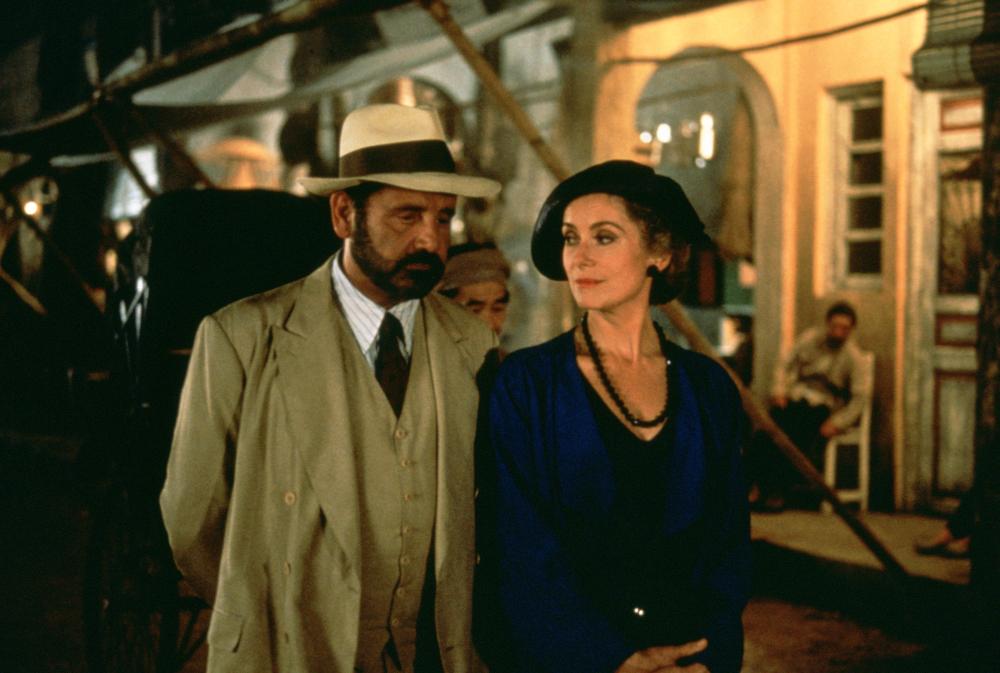


Love plays the main role in a film. The one could say, that love plays a vital role in almost all events of Indochine. Love is a blessing and curse. Almost every major event starts with love: love of Eliane to her foster daughter; love of Camille to Jean-Batiste; love of Tanh, and then Camille, to the homeland. In the end, Eliane keeps a piece of the French Indochine in her grandson Etiene – the son Jean-Batiste and Camille – and her love to grandson symbolizes the love to the lost part of the world.

Catherine Deneuve, who used to represent Marianne, again depicts her country. At first, Eliane makes an impression of cold and arrogant woman, but “behind the curtain” there is passionate woman, who is capable of real love. She is capable of brave decisions, she could lead by example, but the historical events break her and she sadly becomes the remnant of the French Empire. Other actors were also brilliant: Vincent Perez as impulsive Jean-Batiste; Jean Yanne as cynical policeman Guy; the list goes on and on.


Indochine is a sad, sincere and beautiful film. I strongly recommend to watch it together with The Last Emperor.


9/10

Sunday, March 22, 2015

Polytechnique

If I have a boy, I'll teach him how to love

On the 6th of December, 1989, the life at The Ecole Politechnique was as usual. Nothing predicted a tragedy, until one one young man entered the classroom and shot into the ceiling...


The Ecole Politechnique Massacre was a societal shock. Until this day, there is a raging debate about the modus operandi of Marc Lepine. This film depicts the day of this shocking tragedy.

The director took a formalist approach in depicting the events of The Ecole Politechnique Massacre. Denis Villeneuve doesn't depict any theories or guesses about the modus operandi of the murderer; he merely shows one day in life of students of The Ecole Politechnique. By using this approach, the director follows the cinematography of Michael Haneke, especially his “glaciation trilogy” («The Seventh Continent”, “Benny's Video”, «71 Fragments of a Chronology of Chance”).


The film starts with murder of a female student, who stands near the copy machine. Then, the director gets back to beginning of this day and depicts the day from a different points of view: The Murderer, The Female Student and The Male Student. Politechnique draws a clear parallel with a last film of the “glaciation trilogy” - «71 Fragments of a Chronology of Chance”. Nevertheless, compared with the film of Michael Haneke, all fragments of Politechnique are clearly connected from the beginning.

The director shows an indifference of the society, which led to this terrible tragedy. As everybody knows, you cannot change the history; nevertheless, during the film, there are many moments, when this crime could have been prevented or stopped. Anyway, this terrible crime was committed and, in my opinion, the society takes a larger part of blame for it. It were not the horror films, the violent computer games or some psychological or some other societal theory, it was the society as the whole.


Politechnique is a film which makes you think. This tragedies are happening again and again, but we treat them, mostly indifferent, hoping that it will not touch us.


7/10

Tuesday, March 10, 2015

L'important c'est d'aimer

The Love in the Gutter

Andrzej Zulawski has never made the so-called “normal films”. The Director has turned an over-the-top family drama into the mix of horror, parable and philoshopic film essay (Possession); stirred an erotic film with europop soundtrack by a loose adaptation of Possessed, political thriller and drama (La femme publique).

Servais Mont, a photographer, is forced to make pornographic photos in order to pay for his father's debts. One day, he sneaks into the shooting of a third-rate erotic film to make a few photos of a third-rate actress Nadine Chevalier. Servais falls in love with Nadine and he borrows $20,000 from gangsters in order to buy Nadine a part in the avant-garde version of “Richard III”.


First of all, Andrzej Zulawski has made film about love, which is sincere and selfless. The love story begins in a disgusting environment – shooting of a second-rate erotic films, animalistic pornographic copulations, dirty rooms. The Director makes a great use of comparison between real and fake love. Every pornographic photoset is lifeless and doesn't have any beauty. On the other hand, every eye contact between Servais and Nadine is full of despair, suffering and love.

Along with Jules et Jim author, Andrzej Zulawski uses the love triangle scheme. Nadine is married to Jacques – an infantile cinefile, who lost all passion for life and incapable of physical love, but he dragged her out of the misery. The side of the triange is Jacques, who tries to win love of Nadine. Nothing lasts forever and one of the sides has to make a painful choice.


Romy Schneider sleeps, eats and breathes Nadine Chevalier. A woman with a cheap prostitute's make-up, who is forced to play in erotic films. She's torn apart between Servais, for whom she is falling in love, and her husband Jacques, to whom she has moral obligations. Jacques Dutronc as inert Jacques, who perfectly understands his position as a clown and who suffers from incapability to give Nadine love and tenderness, Klaus Kinski in a stunning supporting role as half-mad Karl-Heinz.


“L'important c'est d'aimer” is one of the most sincere love stories, The French debut of Andrzej Zulawski doesn't “blow brains out”, as Possession does, but it touches the most hidden parts of your soul.


10/10

Sunday, March 1, 2015

Camille Claudel 1915

Whom the gods love die young

In 1913, Camille Claudel, with the consent of her brother Paul, was admitted to the mental institution. Lacking the possibility to sculpt, she spends the days yearning for seldom visits of her brother.

First, the one should understand that «Camille Claudel» and «Camille Claudel 2015» could not be compared. The only three thing which unites them are those: figure of Camille Claudel; two great actresses for the main role and that the late film, in some aspects, continues the first one.

The author shows a fading Camille Claudel. Every day in the mental institution nails the coffin of her physical and artistic life. The spectator should answer the main question – does a mental condition of Camille Claudel deserves a life incarceration in the mental institution?


Juliette Binoche naturally portrays Camille Claudel. The Actress, by using a minimum of artistic expression, showed the fading of all hopes and aspirations of a great artist. In the end, there is only a shell of once great and beautiful Camille Claudel.

The mental institution depicted as a hell, which destroys people. Bruno Dumont, in line with Robert Bresson and Michael Haneke, uses the minimalistic and realistic attitude in portraying the institution – mad women with rotten teeth; cold rooms; old female monks as guardians.


Paul Claudel, along with Augustus Rodin, is an evil genius in the life of Camille Claudel. Rodin made Camille mad; Paul condemned her to a life imprisonment. Paul Claudel depicted as a stern religious fanatic, who punishes Camille for her sins.

«Camille Claudel 1915» is a hard drama about mental disintegration. It is hard to watch, but this film will certainly impress you.


8/10

Sunday, February 15, 2015

Damage

Damaged people are dangerous. They know they can survive

The one should watch on the Saint Valentine’s Day some romantic film. I am a cynical lawyer, that is why the traditional love stories «love from the first sight-looking for a lost love-a sudden meeting-first date-and they lived happily» amuse me. Because of this, I gave decided to watch some unusual love story.

The Right Honourable Doctor Stephen Fleming MP is Minister without Portfolio, but he is expected to get the Department of Health. The family life of Stephen also good: loving wife, successful son and cute little daughter. One day at the French Embassy Stephen meets Anna Barton, to whom he is immediately attracted. After a few days his son introduces his fiancée – the same Anna Barton, - but it cannot stop Stephen…


The storyline of Damage, at first sight, is rather banal and boring. Nevertheless Louis Malle, as in his earlier works, took the trivial story and turned it into a spectacular story of all-consuming, doomed and passionate love. As I said before, the conventional love stories bores me. When you think about Damage you could say one word, which the most accurately characterize this film – the fatality. The affair of Anna and Stephen is a mad waltz of mentally traumatized woman and vehemently insane man. The one could feel the fatality by watching the sex scenes, which looks like a fight and does not even hint any tenderness.

Anna Barton reminds of a fire, which attracts butterflies. Every word, gesture and look of Anna hints the hidden danger. As Catherine from «Jules et Jim», Anna is capable of loving of two at the same time – Stephen and his son. However, the son, because of his naiveté and intellectual limits, cannot fully sense the dangerous aura of Anna. The mother instinct of Stephen’s wife feels Anna’s danger, but she is incapable to protect her son.


Any normal person would tell that Stephen Fleming’s behavior is despicable. On the other hand, who has not dreamed about such affair? Stephen’s action are driven by his attraction to Anna’s «fire», it is not the usual short affair between bored old politician and cute girl. He tries to break-up with Anna, but his mind cannot shut his passion.

Louis Malle has never judged his heroes – neither the collaborator Lacombe Lucien, neither the bored socialite Jeanne nor the petit bourgeois family in «Milou en Mai». He watches and feels certain compassion for the weaknesses and vices of his heroes. This feature makes the films of Louis Malle more interesting than «black and white» films of other directors.


«Damage» is a clever and subtle film, which would be interesting to everyone.    

9/10

Saturday, February 7, 2015

House of Cards (Season 1)

It only takes ten seconds to crush a man's ambitions

I admire the original BBC House of Cards. That is why, when I heard about the Netflix remake, my attitude was rather skeptical. Nevertheless, after looking at a cast and watching the trailer, I have decided to give a chance to the American Version.

The President-elect Garrett Walker is in a middle of transition. Frank Underwood – a Congressman from South Carolina's 5th congressional district and House Majority Whip – was passed over for the Secretary of State, despite an early promise. Devastated Frank swears revenge and, at first, he sabotages the confirmation of Walker’s choice for the Secretary of State – Senator Michael Kern. In order to do his dirty work, Underwood enslaves the troubled Congressman Peter Russo. In addition, with his wife’s silent consent, he starts an affair with Zoe Barnes - ambitious young political correspondent – in order to get a good ally, who would print his «leaks». The killing of the nomination is just a first step; Underwood starts to grab control over all relevant political and legislative agenda in order to get closer and closer to the President…


The US Congress usually «enjoys» low levels of popularity. Every day in the news, people hear about the divided House, which cannot pass anything, about another 15-hour filibuster from another egocentric Senator and so on and so on.

Strictly speaking, House of Cards is a not a remake of the original BBC series. It is better to call it the translation of Michael Dobb’s original novel to the US political language. It was so because the UK and the US has a different political system – the US got a presidential republic and the UK is a constitutional monarchy – and a «clean remake» would be a disastrous one.


The longevity gives House of Cards the advantage of detail. Every character is well-written and well-realized. For the first two series, the spectator is carefully introduced to every character in a shady water of D.C. (congressmen, senators, their spouses, mistresses, lobbyists, police officers, bodyguards and etc.). Plots of some characters takes unusual twists. As Gillian Cole – at first an idealistic and talented girl – hired by Claire Underwood to promote her non-profit, starts her own game with a possible lethal end to political games of The Underwoods.

Frank Underwood is not a copycat of Francis Urquhart. They differ in everything: the background, the political stance, the personality. Even the using of the fourth wall is quite different – if Francis Urquhart used it in order to poke opponents and audience, Frank Underwood uses it in order to explain his machine-like plans, which strongly differs from his idealistic political speeches.


The main paradox of Frank Underwood is that, despite his ruthlessness, cold cynicism, immorality, the one could feel a certain admiration for him. I think some spectators might even that real Frank Underwood as the POTUS would not be a bad choice for the US, because of his ability to get things done. The best quote about Frank Underwood comes from Oscar Wilde: «Sin is the only real colour-element left in modern life».

The only weak spot of this series is a little cooling off and repetition of plots in the middle of a season, but it fixes itself, when the game of Underwood reaches conclusion.

House of Cards deserves a place near such masterpieces of political cinema as «All the President's Men». If you have not seen it, fill the gap in your education and immediately watch it.


10/10

Saturday, January 31, 2015

Birdman

People, they love blood. They love action. Not this talky, depressing, philosophical bullshit

Riggan Thomson used to be a blockbuster star, but it was a long time ago. In an attempt to reclaim past glory, he writes, directs and plays the leading part in the stage adaptation of Raymond Carver's short story «What We Talk About When We Talk About Love». Riggan has to face many difficulties: the skeptical daughter; the critical contempt; the trolling of Mike Shiner and, first, his alter ego…


Birdman, with sufficient simplification, could be described by these words – the self-parody. Michael Keaton, who was the best Batman, plays his own distorted image – the washed-up actor, who desperately tries to succeed in the «real art». Riggan Thomson is the quintessential dinosaur – despises the social networking; tries to rebuild relationship with his estranged daughter and worries about not getting in the headlines, if a plane of him and Clooney would crash.

Alejandro G. Iñárritu makes fun of the modern Hollywood, where the form has taken over the substance. The modern culture, in author’s opinion, got the same traits – the cheap épatage; the silly tweets and the stupid YouTube videos could make more popular, than the «real art».


The author pokes the washed-up actors in general, who are trying to reclaim their glory be acting, which is incomparable with their acting possibilities. In order to show the limits of Riggan’s acting, the director creates the character of Edward Norton – the grotesquely method and brilliant actor. A critic also shows Riggan the difference between real and fake acting.

The film uses, jokingly, the theme of temptation. His alter ego – Birdman, constantly tempts Riggan Thomson. As a classical demon, he constantly seduces Riggan to abandon art and return to the easy buck of blockbusters. Birdman, by giving Riggan the supernatural traits, shows him the advantages of an easy path.


Birdman is a very good film. I would be surprised, if this film will not get any Oscars.

9/10