Sunday, November 15, 2015

La peau douce

It's too late to be late again

Everyone knows about a loveless marriage, formal marriage, marriage by habit or some other marriage, saved by some facts or obligations. Such marriages can last for many years, but one day this house of cards could collapse.

The house of cards could collapse because of love. The destruction of such marriage is depicted by Francois Truffaut in The Soft Skin. At first glance, the film have the simplest storyline. Pierre Lachenay, a well-known writer and editor of a literary magazine, lives the, at first sight, happiest life. He lives with a little daughter Sabina and wife Franca. Everything goes on as usual, until Pierre, after meeting a beautiful air hostess Nicole, is «being hit with the thunderbolt»…


In such situations, a lot of so-called «goody-good people» are trying to follow the norms of society. They are hiding the loved ones, arranging «the love nests», humiliating themselves with friends and relatives. The director depicts all inner shame of Pierre, his attempts to «sit on two chairs», but love breaks his adherence to the societal hypocrisies.


The Film was not made for purpose of advancing the cheap morals or standard hypocrisies; it depicts the evil of lies. The Director says that the real love cannot be mixed with hypocrisy and lies. The loved ones cannot be hided or treated as a toy. Francois Truffaut says to The Spectator – don’t lie, don’t postpone the truth, even the harshest, or you will risk to lose everything.


The Soft Skin is a film which should be viewed by everyone. Despite the fact, that the film is more than 50 years old, it hasn’t lost any truthfulness.

Saturday, September 26, 2015

Tesis

My name is Angela. They're going to kill me

How many times we watch violent films «just for fun»? How many times we think, that the best part in the news are crime reportages? How many times we think, that the people who are disgusted by violence are just pretending? How many times, when we see a crash or some other disaster we are curious to watch the real death and injuries?

When we do this, we always calm ourselves with such thoughts: «The blood in cinema is not real; It doesn’t concern us; He is just pretending; We should be afraid of alive, not dead». But what, if we would vitness the real violent death, how we would speak?


«Tesis» starts and ends with death. In the first scene, the train is stopped because of the accident and the passengers are escorted out of the station. Lots of them want to watch the dead body, but paramedics and metro employees are not allowing it. Nevertheless, the sympathies of the most spectators wouldn’t be on the side of paramedics and metro employees. Then, when Angela’s professor dies, she got a chance to witness the actual death. Angela, at the first sight, is disgusted and afraid, but it is merely the societal norm. In reality she is deeply interested and curious.

The director brilliantly portrays the irrationality of a human nature and attractiveness of the evil. Angela, after watching a snuff film and identifying the main suspect, is continuing to «play with fire» practically and erotically. As with watching death, the investigation of a murder is merely a societal norm; in reality Angela desperately wants to touch the real evil.


Angela is the typical consumer, who always wants more and more «spice». The snuff is merely a cinema genre. In the opinion of a director, snuff is only still stays in the category of a «specialty film», but one day it will be in the mainstream cinema.

Watch and think!


10/10

Saturday, September 5, 2015

L'heure d'été

Of things and men

Olivier Assayas frequently makes films about people, who are struck in the past. In Carlos, the film director has shown an old and physically wasted terrorist, who imagined that he is still the number one threat. Accordingly, in Irma Vep, Olivier Assayas portrayed the French cinema, hopelessly struck in the «nouvelle vague» paradigm.

Summer Hours shows the influence of globalization on a family and the «lifecycle» of family things from important items to lifeless museum objects. Olivier Assayas divides the film by «acts», separated by black screen. In the «premier act», the family is centered around a pariah – 75 year old Helene, but her death breaks down the link and for the rest of the film we see the fate of an inheritance.


The film resembles The Cherry Orchard (a play by Anton Chekhov). As in the play, the «main hero» is an old mansion which symbolizes the Old France. The mansion is turned into the shrine of a famous old painter by his niece Helen. Nevertheless, she understands that her children – Frederick, Jeremy and Adrienne – cannot go on living in the past as her. Helen tries to explain it to her son Frederick – the only child who stays in France – but he doesn’t want to listen.

The main theme of Summer Hours is a history of things; their emotional meaning for people. Every character has a certain thing, which has its own emotional value. This value is destroyed by the harsh reality in a form of taxes, expenses and generational values. The dream of Frederick of keeping the mansion as a «Shrine for the Past» is destroyed by a simple voting – Jeremy and Adrienne are not interested into frozen past. Accordingly, a lot of family things would end up as a faceless museum items.


Olivier Assayas has made Summer Hours as a simple life history. He doesn’t dramatize or sentimentalize. But despite the «simpleness» the film is full of sadness and melancholy for the past. Despite all of that, the file must go on.


8/10 

Saturday, August 1, 2015

La gifle

C’est la vie!

In a life of a geography teacher Jean Douléan everything apparently goes wrong: his mistress leaves him; he faces a possibility of unemployment and he can’t understand his eighteen-years old daughter Isabelle. His daughter «falls in love every five minutes», wants to drop out of the medical school and considers moving in with her boyfriend…

There are cases, when you read the synopsis of a film and it leaves an impression of a banal watching experience. Nevertheless, during the watch you enjoy this film, because of the directing, acting or something else. Sadly, it happens quite rare, but one of these films is «The Slap».


Claude Pinoteau shot «The Slap» as an occurring life story. He doesn’t darkens the mood or put too much melodrama. The film draws parallels from your own life or your acquaintances. This reality was made possible by the fine acting.

Before «The Slap» I saw Lino Venture only as a policeman or gangster. That is why, I was skeptical about this role of Lino Ventura. This film helped me to rediscover this actor – he had convincingly portrayed a strict, but caring father, who tries to connect with his daughter and get his life together.


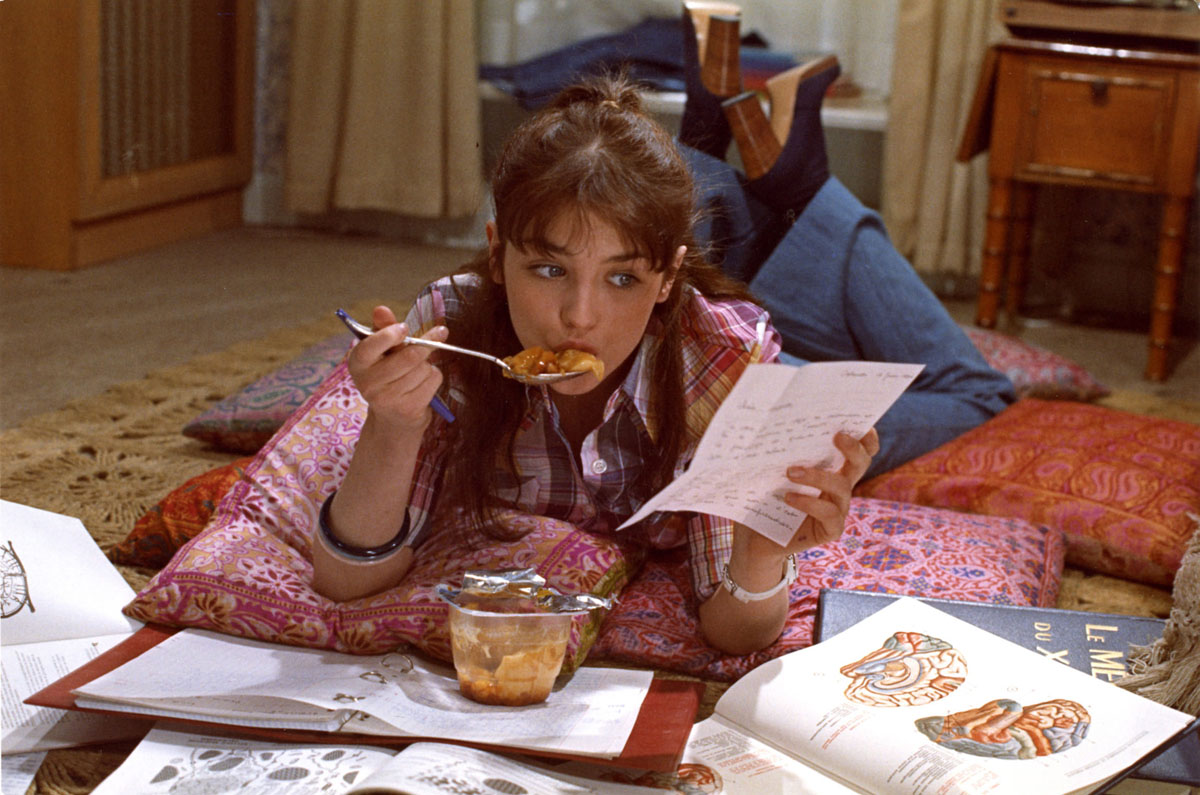
«The Slap» contains the first big cinematic role of Isabelle Adjani. Isabelle Douléan could be described by one word – a hurricane. Of course, Hurricane Isabelle Douléan cannot be compared with the Category 1 Hurricanes Anna and Camille Claudel, but it is definitely the Category 3. Isabelle Douléan is never calm or constant. In an irresponsible sloven Isabelle Douléan you see the future great roles of Isabelle Adjani. Sadly, Isabelle Adjani did not act much in comedies, but she was brilliant in them as in the drama roles.

The secondary roles were also brilliant. Annie Girardot as a selfish mother of Isabelle. Francis Perrin as a pain-in-the-ass boyfriend. Jacques Spiesser as a secret admirer of Isabelle; the list goes on and on.


«The Slap» is a kind and cute comedy, which was also the springboard for Isabelle Adjani. All those who love French comedies and especially Isabelle Adjani fans, should immediately watch this.


7/10

Sunday, July 19, 2015

Gabrielle

I love Gabrielle as a collector loves his most prized object.

The visit of Isabelle Huppert to Moscow was an unexpected and pleasant surprise. I have seen for two times «Les Fausses Confidences» and once again I understood, that if there were no Isabelle Huppert, it would be necessary to imagine her. The 62-year old Actress moved like a ballet dancer and her voice acting was superb. That is why, the wonderful Friday evening should be continued by watching some film with Isabelle Huppert on Saturday.

Jean and Gabrielle Harvey are married for ten years. Their marriage is a rather socially acceptable; they host the salons, take part in charity and patronage. Nevertheless, their marriage in not built on love, as Jean confides to the audience that he loves Gabrielle «as a collector loves his most prized object. » The day of the 10th wedding anniversary goes as usual until Jean discovers a note from Gabrielle in which she writes that she will leave to meet her lover. Jean is completely lost and puzzled, but on the same evening Gabrielle comes back.


Sadly, I have not read Joseph Conrad’s original short story The Return. Even without that, the history of cinema knows many examples of stories about contract or loveless marriages, but in lots of cinema rubbish you could discover the true brilliants. From the first minutes, the film director uses an original technique. Patrice Chereau uses black-and-white and color cinema in order to distinguish between the routine and life.

Patrice Chereau made the film as a duo with «some inclusions» from outside world. Since the letter is read, the dynamite is ready and the foundation of family life is completely destroyed.  The masques of humanity are swept away and two monsters are shown. If in the beginning, Jean is only worried about societal norms, then, during the course of the film, he more and more loses his sanity and even becomes ready to rape his wife.


You could write a PhD thesis on an acting genius of Pascal Greggory and Isabelle Huppert. In «La Reine Margot», Pascal Greggory, almost without words, was able to portray an unprincipled, ruthless and power greedy Duke of Anjou. In this film, The Actor has portrayed the mental disintegration of his character, according to a standard paradigm «denial-rage-trade-depression-acceptance». Isabelle Huppert sometimes acted in not too good films, but the world doesn’t know such phrase as «bad acting of Isabelle Huppert».

«Gabrielle» is a clever and sad drama. If you are an admirer of Isabelle Huppert, watch it immediately.


8/10

Saturday, June 27, 2015

Happy Birthday, Isabelle Adjani!

When someone talks about Isabelle Adjani, he mostly mentions Marguerite de Valois, Camille Claudel, Eliane, Anna and Adelie H. This roles of Isabelle Adjani are timeless, but her career does not stop with this films.

That is why, on the day of Isabelle Adjani’s birthday, the one should remember her lesser known roles. I’ve chosen the best, in my opinion, roles and have put them in the chronological order.

1. Violette et Francois (1977)


After L’Histoire D’Adelie H. Isabelle Adjani acted in a film of Roman Polanski («The Tenant»), in a film of Andre Techine («Barocco») and her next film was a tragic comedy «Violette et Francois».

Violette and Francois don’t care about the future. Violette was fired from the bank; Francois was booted from the real estate agency, when his superiors found out that his best «customer» was Violette. Unfortunately, the young couple has a little son Paul and they have to find a way to make ends meet. Francois loses yet another job; he can’t secure funding for his newspaper, so he decides to become a professional shoplifter. After first failed theft, they decide to get married and on the day of the wedding, Violette agrees to help Francois in the shoplifting business.

The film shows that Isabelle Adjani is capable of playing not only tragic heroes. The actress has naturally portrayed the evolution of Violette from the infantile and naïve teenager, who got a crush on the Hooligan and ready to condone all of his activities, to the grown woman capable of tough and painful decisions.

2. Les soeurs Brontë (1979)


Frankly speaking, I have discovered Isabelle Adjani quite recently – on the last summer. After acquaintance with her acting, I have decided to reread The Idiot and I have imagined only Isabelle Adjani as Nastásya Philíppovna. Three months ago, I have decided to read the books of the Bronte sisters.

While reading «Wuthering Heights», I imagined only one actress as Catherine Earnshaw – Isabelle Adjani. Sadly, The Actress has not portrayed Catherine, but she morphed her in the image of Emily Bronte.

When «Wuthering Heights» were first published a lot of critics thought that the writer was a man. Isabelle Adjani showed the crossing of masculine and feminine identity in Emily – dressed in a male's outfit to walk the grey fields; even some men say to her that she should be born as a man. Emily Bronte was the hideous and shy woman, but her seldom outbursts were like the northern wind.

3. Tout feu, tout flamme (1982)


It is not widely known, that Isabelle Adjani has started her career as a comedy actress. Into the troupe of the Comedie-Francaise The Actress has played in classical French comedies. Despite the fact, that Isabelle Adjani Isabelle Adjani has earned her place in the Pantheon after «The Story of Adelie H.». After that, The Actress has been always admired and worshipped for her dramatic roles; nevertheless, she had also sometimes played in cute comedies.

In «Tout feu, tout flamme» Isabelle Adjani shows us a variety of persons: the Princess of Darkness, secretly ruling the French and European economy; the sweet girl, who got to take care of her family; the raging monster, who is ready cut anybody’s throat and so on.

Jean-Paul Rappeneau mixes different genres: comedy; father-daughter drama; gangster film and melodrama. The main theme of this film is the father-daughter conflict, spiced by a comedy sauce.

4. Mortelle randonnée (1983)


Most critics say Mortelle Randonnée is the definitive neo-noir, but this film couldn’t be categorized in just one genre. Claude Miller, the talented apprentice of the Nouvelle Vague cinema, who has worked as assistant with Francois Truffaut, Jean-Luc Godard and Jacques Demys, cunningly mixes different genres. Mortelle Randonnée is, one could say, the mix of absurdist tale and noir.

Mortelle Randonnée has a dreamy-like atmosphere: heroine, planning her activities by checking horoscopes, telepathically connecting heroes, supporting characters, which act like a pulp fiction heroes.

Isabelle Adjani gets less screen time but her acting is superb. She shows us a variety of persons: the sweetly naïve student Lucy Brentano, the arrogant top-model Eve Granger, the tragedy-broken Catherine Leiris, and so on. To all those, who say Isabelle Adjani is only fit to play drama queens and a hysterical female, I strongly recommend watching this film.

5. Toxic Affair (1993)


After Camille Claudel Isabelle Adjani has stopped her acting career for five years. She has returned from her «vacation» by acting in Toxic Affair – another forgotten Adjani’s film (along with Tout feu, tout flame, Antonieta, L'année prochaine... si tout va bien and some other).

Toxic Affair would be stupid and boring if it wasn’t for one person, whom we call Isabelle Adjani. The Actress completely steals the show by her magnificent acting. She proves that for the real actress a five year break means nothing. Isabelle Adjani truly captures all hysterics, mood swings, incoherence and egoism of Penelope. The Adjani’s facial expression is superb, as in «The Story of Adelie H.», you could even call this film «The Story of Adelie H. Ultra Light».


Toxic Affair proves that the time break means nothing for the truly great artist – she will electrify after 5, 10 or 20 years.

Sunday, June 7, 2015

Danton

Death is the beginning of immortality

In the cold spring of 1794, on the second year of The Republic, Georges Jacques Danton comes back to Paris and tries to stop the Reign of Terror…

The director of «Danton» was a famous Polish film director Andrzej Wajda and, of course, the critics saw a parallel between the Revolution and the Solidarity movement. Nevertheless, Andrzej Wajda is much more than a politicized film director and you can’t analyze «Danton» from this simplistic point of view.


From the first minutes, Andrzej Waida draws the spectator into the real Reign of Terror: hungry people, ruthless guardsmen, blood-thirsty members of the Committee of Public Safety and merciless guillotine. The ruthless struggle between Maximillian Robespierre and Georges Jacques Danton starts.

France is torn apart by a «quite» civil war with more than a two sides – Jacobins, Royalists, Journalists, Hebraists and so on. Despite an adoption of the Declaration of the Rights of Man and Citizen and democratic values, the country moves closer and closer to the dictatorship, which knows only one word – death. The National Convention smells death and the biggest group of deputies proves their nickname – Le Marais.


Georges Danton is depicted as a man with lots of illusions. He thinks that the Reign of Terror could be smashed by words. Georges Danton refuses to crush Robespierre by military force and he is convinced that the trial would be the tribune for the People. The Gods of Revolution craves for blood of their children and Danton would be the first human sacrifice for them. I cannot judge the historical accuracy of Danton’s portrayal. But you can affirmatively say that it is one of the best roles of Gerard Depardieu. If you want to enjoy the real Depardieu, who acted in the films of the best directors and starred with the best female counterparts, you should not miss this film.

Maximillian Robespierre is a very controversial historical figure. Some authors (historians and writers) are depicting him as a ruthless monster; other authors are depicting him as a true martyr for the cause of the Revolution. Andrzej Waida portrayed Robespierre as a stern figure and a firm believer in the Revolution. In the beginning he shows some remains of a human nature and tries to save his friends and comrades from the Tribunal and execution. But, as the overall situation in France deteriorates and the members the Committee of Public Safety becomes more and more blood-thirsty, a soul of Robespierre is progressively melting. When I read a literature about Robespierre, I imagined him as a Wojciech Pszoniak character – stern manners, silent voice and the eyes, which turns your blood into ice.


Culmination of the film is the trial against a members of Danton’s party. The trial could be described by Augustus phrase (I think it is misattributed to him): «You must die!» Despite courage and oratorical prodigy of Danton, the Committee of Public Safety sentenced him to death. There is no place for a rule of law, presumption of innocence and equality in the Reign of Terror. Nevertheless, «that rat Robespierre» and many other would follow Danton to the scaffold, and the star of one young general is rising, who will bury the Revolution.


Danton is a sincere and scary film about the Reign of Terror. I recommend to watch it in pair with La Reine Margot.