Sunday, March 6, 2016

In memory of Andrzej Zulawski (Piesn triumfujacej milosci)

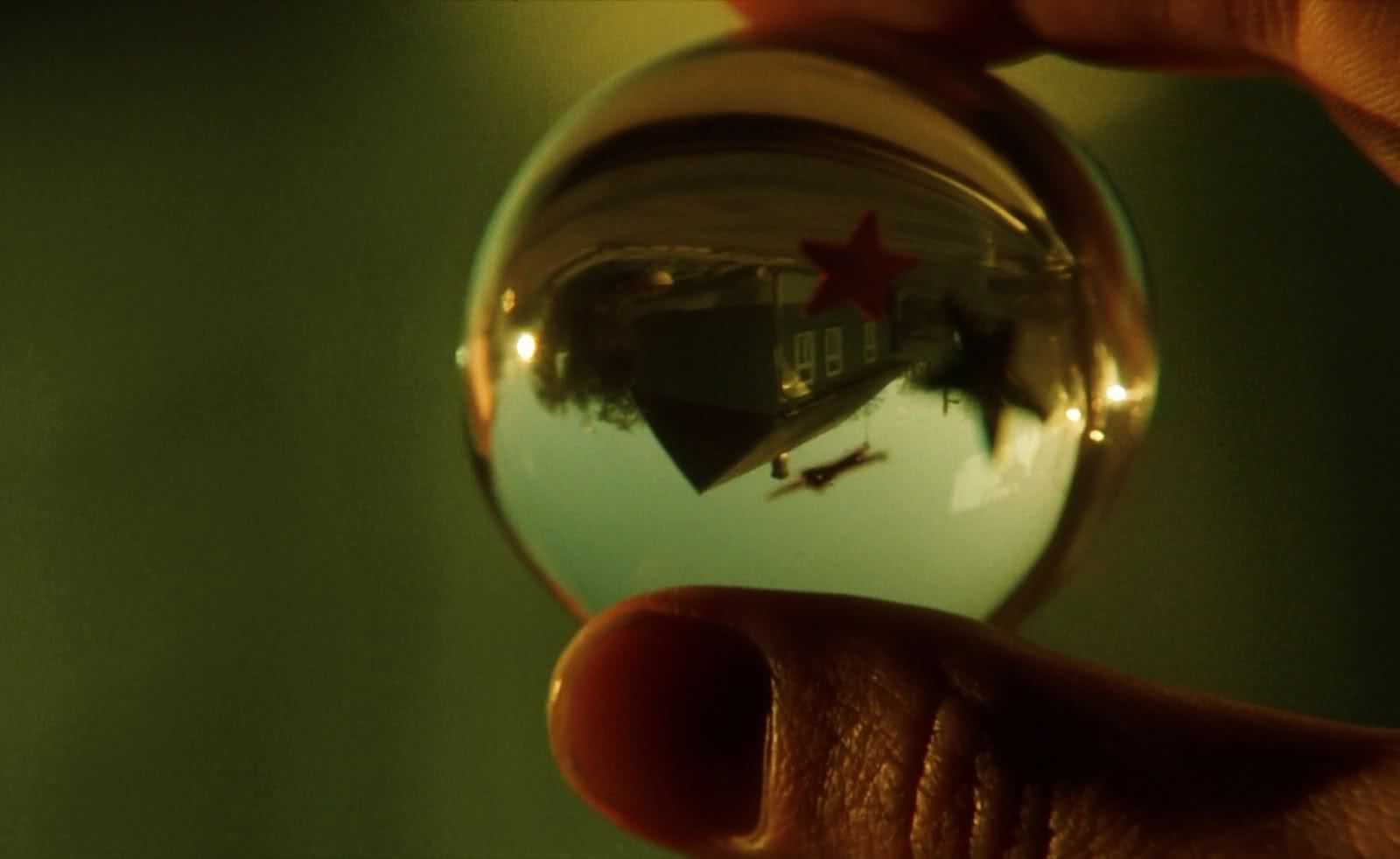
This is a song about love

Andrzej Zulawski died two weeks ago and as one my good friend said; that the artists (including directors, actors, painters and artists) should be remembered because of their art, not because of their personalities. Following the words of my friend, I have decided to watch the early works of Andrzej Zulawski.

The first feature of Zulawski is an adaptation of a short story, written by Turgenev. I have a small confession to make; that I haven’t read this story, but, judging by the later films, for Zulawski adaptation is merely a word.


From the first seconds, you could see the technical language of Zulawski: haunting music of Andrzej Korzyński and constantly following camera. The film depicts the story of a doomed love, which would be later present in L’important c’est d’aimer and Mes nuits sont plus belles que vos jours.

Using the minimum of resources and in just twenty-six minutes, Andrzej Zulawski depicts the story of a woman, living in a so-called «normal marriage», which crashes after the first glimpse of a true of love. Beata Tyszkiewicz holds the acting torch, which will be passed to Romy Schneider, Isabelle Adjani and Sophie Marceau.


The first feature of Andrzej Zulawski shows us that the real talent could be a substitute for the lack of technical resources. Some simplicity of this work, compared with later features, is caused only by technical limitations.

Tuesday, February 23, 2016

La double vie de Véronique

Feelings are what link people together, because the word «love» has the same meaning for everybody (Krzysztof Kieślowski)

In 1995, Krzysztof Kieślowski was invited to Oxford University and during the interview he was asked about a role of culture.  Krzysztof Kieślowski said the following: «There are too many things in the world which divide people, such as religion, politics, history, and nationalism. If culture is capable of anything, then it is finding that which unites us all. And there are so many things which unite people. It doesn't matter who you are or who I am, if your tooth aches or mine, it's still the same pain».

Following this pattern, The Director shot in 1991 «The Double Life of Véronique». The main characters are two identical young women called Véronique, albeit one of the is the Polish and other one is the French. After looking at the year of release and remembering about politicized Polish cinema, you would expect a film about Polish renaissance. Nevertheless, the film was not shot for the sake of another political pamphlet.


The film starts with depicting two little girls – Véroniques. For the first 30 minutes, the life of the Polish Veronique is depicted: graduation from a Music College, romance, visiting the aunt in Krakow, good auditioning and offer of a professional choral career. One day, Veronique walks the streets of Krakow and sees in a bus the identical young woman. After the moment, when Véronique had chosen art over love, the film switches to the French Véronique.

«The Double Life of Véronique» deals with the importance of choice in a fast-paced life. In the film the choice is divided between two spheres – art or love? Despite the social and economical differences of characters – Véronique from a rich France and Véronique from a poor Poland; The Director shows that there are many things, outside the spheres of money and politics, which unites the people. Those things cannot be felt or sensed, but anyone can at least understand it by using the «tooth metaphore».


In my opinion, The Director also teases people, who try to make simple things look complicated; who are trying to find the second meaning in everything. The doll theatre scene is illustrating. The children are fascinated, because they can’t understand the forces which move those dolls. At the same time, Véronique is trying to find the Muppet Master and she succeeds; she can’t no more watch this spectacle as a child. The later actions of French Véronique also could verify this opinion, because the only question is «Why are you doing this»?


Watch «The Double Life of Véronique» and, even better, watch it again. Perharps this film will also touch something into you.


Thursday, February 11, 2016

Valentine’s Day Films

The Saint Valentine's Day is not far and I have decided to make a film selection for this very special day!
Film №1. For all those, who believe in love at the first sight!
Damage (1992), directed by Louis Malle.
http://www.imdb.com/title/tt0104237/?ref_=nv_sr_3


Film №2. For those, who don't believe that love lives for three years!
The Night Porter (1974), directed by Liliana Cavani
http://www.imdb.com/title/tt0071910/?ref_=nv_sr_1


Film №3. For those, who don't believe in love triangles!
L'important c'est d'aimer (1974), directed by Andrzej Zulawski.
http://www.imdb.com/title/tt0073155/?ref_=fn_al_tt_1


Film №4. For those, who believe in love triangles or even squares!
Possession (1981), directed by Andrzej Zulawski.
http://www.imdb.com/title/tt0082933/?ref_=nv_sr_3


Film №5. For those, who believe in doing anything for the loved one.
Violette Nozière (1978), directed by Claude Chabrol.
http://www.imdb.com/title/tt0078467/?ref_=fn_al_tt_1


Saturday, January 9, 2016

15 minutes, 17 parties

The Political Constitution of the Republic of Chile legitimized the status of Augusto Pinochet. The President of the Republic was nominated for 8 years and a plebiscite was scheduled in 1988. However, the possibility of plebiscite seemed extremely low. Bowing to the international pressure, Pinochet schedules the plebiscite on 5 of October 1988 with 27 days of campaign. The opposition was given exactly 15 minutes per day on the TV. In normal circumstances, the opposition could lose; in the Pinochet’s Chile the opposing figures could be murdered…


The film starts on the eve of the plebiscite. The majority opinion is that opposition is destined to fail: poorly organized, afraid of the military and, most of all, not believing in a possibility of victory. René Saavedra thinks that the victory is possible. He devises a radical campaign plan by devising Coca-Colesque campaign, targeted on the middle class – Pinochet base, the youth and the potential absentees. René Saavedra wipes out almost all politics from the campaign and brings together the opposition under one rainbow.

Modern sociologists and philosophers have written the innumerable number of pages on the consumer society, especially on willingness to surrender the political rights for the sake of preserving their preferred lifestyle. Symbolically, the first scene depicts showing of an advertisement of a soda called Free. The concept of this ad is that youth fairly satisfied with fictional liberty, music and riot.


A political campaign always aims on the hidden fears. The Pinochet campaign tries to bully voters by claiming that opposition would bring back the socialism and promises the bloodless dictatorship. At the same time, the opposition achieves the impossible – selling to the consumers the ideas of freedom and liberty under a disguise of a Coca-Colesque campaign and mobilize «the great silent majority».

One of the critics said, if one should really celebrate the moment that political activism turned into marketing. I say that, if advertising helped to achieve the great goat, than the film, depicting «The victory of Coca-Cola over dictatorship», deserves a very high mark.


8/10


Sunday, November 15, 2015

La peau douce

It's too late to be late again

Everyone knows about a loveless marriage, formal marriage, marriage by habit or some other marriage, saved by some facts or obligations. Such marriages can last for many years, but one day this house of cards could collapse.

The house of cards could collapse because of love. The destruction of such marriage is depicted by Francois Truffaut in The Soft Skin. At first glance, the film have the simplest storyline. Pierre Lachenay, a well-known writer and editor of a literary magazine, lives the, at first sight, happiest life. He lives with a little daughter Sabina and wife Franca. Everything goes on as usual, until Pierre, after meeting a beautiful air hostess Nicole, is «being hit with the thunderbolt»…


In such situations, a lot of so-called «goody-good people» are trying to follow the norms of society. They are hiding the loved ones, arranging «the love nests», humiliating themselves with friends and relatives. The director depicts all inner shame of Pierre, his attempts to «sit on two chairs», but love breaks his adherence to the societal hypocrisies.


The Film was not made for purpose of advancing the cheap morals or standard hypocrisies; it depicts the evil of lies. The Director says that the real love cannot be mixed with hypocrisy and lies. The loved ones cannot be hided or treated as a toy. Francois Truffaut says to The Spectator – don’t lie, don’t postpone the truth, even the harshest, or you will risk to lose everything.


The Soft Skin is a film which should be viewed by everyone. Despite the fact, that the film is more than 50 years old, it hasn’t lost any truthfulness.

Saturday, September 26, 2015

Tesis

My name is Angela. They're going to kill me

How many times we watch violent films «just for fun»? How many times we think, that the best part in the news are crime reportages? How many times we think, that the people who are disgusted by violence are just pretending? How many times, when we see a crash or some other disaster we are curious to watch the real death and injuries?

When we do this, we always calm ourselves with such thoughts: «The blood in cinema is not real; It doesn’t concern us; He is just pretending; We should be afraid of alive, not dead». But what, if we would vitness the real violent death, how we would speak?


«Tesis» starts and ends with death. In the first scene, the train is stopped because of the accident and the passengers are escorted out of the station. Lots of them want to watch the dead body, but paramedics and metro employees are not allowing it. Nevertheless, the sympathies of the most spectators wouldn’t be on the side of paramedics and metro employees. Then, when Angela’s professor dies, she got a chance to witness the actual death. Angela, at the first sight, is disgusted and afraid, but it is merely the societal norm. In reality she is deeply interested and curious.

The director brilliantly portrays the irrationality of a human nature and attractiveness of the evil. Angela, after watching a snuff film and identifying the main suspect, is continuing to «play with fire» practically and erotically. As with watching death, the investigation of a murder is merely a societal norm; in reality Angela desperately wants to touch the real evil.


Angela is the typical consumer, who always wants more and more «spice». The snuff is merely a cinema genre. In the opinion of a director, snuff is only still stays in the category of a «specialty film», but one day it will be in the mainstream cinema.

Watch and think!


10/10

Saturday, September 5, 2015

L'heure d'été

Of things and men

Olivier Assayas frequently makes films about people, who are struck in the past. In Carlos, the film director has shown an old and physically wasted terrorist, who imagined that he is still the number one threat. Accordingly, in Irma Vep, Olivier Assayas portrayed the French cinema, hopelessly struck in the «nouvelle vague» paradigm.

Summer Hours shows the influence of globalization on a family and the «lifecycle» of family things from important items to lifeless museum objects. Olivier Assayas divides the film by «acts», separated by black screen. In the «premier act», the family is centered around a pariah – 75 year old Helene, but her death breaks down the link and for the rest of the film we see the fate of an inheritance.


The film resembles The Cherry Orchard (a play by Anton Chekhov). As in the play, the «main hero» is an old mansion which symbolizes the Old France. The mansion is turned into the shrine of a famous old painter by his niece Helen. Nevertheless, she understands that her children – Frederick, Jeremy and Adrienne – cannot go on living in the past as her. Helen tries to explain it to her son Frederick – the only child who stays in France – but he doesn’t want to listen.

The main theme of Summer Hours is a history of things; their emotional meaning for people. Every character has a certain thing, which has its own emotional value. This value is destroyed by the harsh reality in a form of taxes, expenses and generational values. The dream of Frederick of keeping the mansion as a «Shrine for the Past» is destroyed by a simple voting – Jeremy and Adrienne are not interested into frozen past. Accordingly, a lot of family things would end up as a faceless museum items.


Olivier Assayas has made Summer Hours as a simple life history. He doesn’t dramatize or sentimentalize. But despite the «simpleness» the film is full of sadness and melancholy for the past. Despite all of that, the file must go on.


8/10